Curriculum
The staff at Tanworth have created a curriculum for the children of Tanworth. Our curriculum focuses on 5 key areas:
- Developing Positive Relationships
- Enjoyment and Achievement
- Managing Feelings and Behaviour
- Our own Physical Health and Wellbeing
- Academic Success for all
Our Exciting Curriculum Overview

These are our topic titles for each of our exciting class themes. If you would like to find out more about each topic click on the link below.
You can find out more about each curriculum area and what it looks like at Tanworth by clicking on the subjects below.
Personal, social, health and economic (PSHE) education is an important and necessary part of all pupils' education.
Although PSHE is a non-statutory subject, the Department for Education believe schools should tailor their PSHE lessons to reflect the needs of their pupils.
At Tanworth in Arden Primary School and Nursery, we endeavour to equip our pupils with the knowledge, understanding, healthy attitudes and practical skills needed to live healthy, safe, productive and fulfilled lives.
After the review of PSHE, the government has made relationships and health education compulsory in primary schools. Sex education in primary schools is not compulsory but we feel it is very important to include this in our curriculum at Tanworth in Arden.
Please read about our sex education consultation for parents on our parent page for further information. Our PSHE and RSE policy can also be found under 'key information'.
At our school we ensure we meet the statutory health guidelines and teach our pupils about mental wellbeing, internet safety and harms, physical health and fitness, healthy eating, drugs and alcohol, health and prevention and First Aid.
PSHE Snapshot

Jigsaw PSHE
At Tanworth, we use a whole-school PSHE scheme called Jigsaw. Jigsaw combines PSHE, emotional literacy, mindfulness, social skills, internet safety and spiritual development. The scheme ensures PSHE is embedded throughout the school in a progressive, spiral format. Jigsaw is designed as a whole school approach, with all year groups working on the same theme (called a puzzle) at the same time.
There are six puzzles, which are each made up of six lessons (called pieces) and one puzzle is taught per half term. Every year group studies the same puzzle at the same time allowing for whole-school themes and a clear build-up of knowledge and skills. Lessons are delivered in an age and stage-appropriate way so that they meet children's needs. The six puzzles are below:
Autumn 1 – Being Me
Autumn 2 – Celebrating Difference
Spring 1 – Dreams and Goals
Spring 2 – Healthy Me
Summer 1 – Relationships
Summer 2 – Changing Me
The Jigsaw approach is underpinned by mindfulness. Mindfulness is being able to observe your own thoughts and feelings as they happen, in the present moment, applying no judgement. Jigsaw teaches children to understand their thoughts and feelings, helping to develop their awareness, and their capacity to be mindful human beings.
PSHE Jigsaw in our school
What do our children think?
Overviews and Parent Guidance for Jigsaw
CHIPS (Challenging Homophobia in Primary Schools)
Protective Behaviours
Tanworth in Arden is part of a county-wide initiative to keep children safe.
We teach Protective Behaviours to our children during the Autumn term and revisit the themes regularly through the school year.
Protective Behaviours is based on two themes, which are used to teach and reinforce the basic concepts on which the process is based.
WE ALL HAVE THE RIGHT TO FEEL SAFE ALL OF THE TIME.
THERE IS NOTHING TOO AWFUL (OR TOO LITTLE) THAT WE CAN'T TALK ABOUT IT WITH SOMEONE.
Rights, Responsibilities and Choices
The first theme reinforces not just our individual right, but our responsibility to make sure other people feel safe with us. This helps us to think about the idea of responsible citizenship and encourages thoughtfulness about our own safety, as well as the safety of others.
Support Networks
The second theme introduces the idea of personal support networks of people we could go to when not feeling safe and a process for how we might identify these people. We often revisit this idea before school holidays as the children's networks often change during holidays.
Feeling Safe and Early Warning Signs
Feeling safe is generally something we don't think about until the feeling has gone away and we start to feel uncomfortable or unsafe. Protective Behaviours helps the children to identify what feeling safe is like for them and teaches the ability to recognise the difference between feeling safe, having fun, scary feelings, risking on purpose and feeling unsafe. When we stop feeling safe, our bodies prepare us for action with a rush of adrenaline and many other physical changes. These are called the body’s 'Early Warning Signs'.
Family Time
In Year 6, the children have the opportunity to become a Family Time Leader and to deliver fun but also educational activities (linked to current events) to the other children in KS1 and KS2. The families are named after inspirational people from a variety of backgrounds, who have done inspiring things because of their faith.
The year 6 Leaders learn all sorts of skills that will help them with their transition to secondary school such as teamwork skills and leadership skills. They also grow in self-confidence, with the experience hugely improving their self-esteem.
The younger children in the family group have role models they can look up to and they themselves develop new skills e.g. making new supportive friendships with other children of different ages.
What do our children think?
In accordance with The Department for Education we aim to actively promote British values in our school so that we ensure our children leave Tanworth in Arden prepared for life in modern Britain.
British Values Snapshot

Design and Technology progression Reception to Year 6
Intent:
At Tanworth, Design and Technology is about providing opportunities for children to use creativity and imagination to design and make products that solve real and relevant problems, considering their own and others' needs. Where possible, DT learning is linked to the current theme so that learning is in context. We aim to provide opportunities for the children to learn, apply and strengthen essential skills required in the designing, making and evaluating of an effective product for a given purpose.
It is also the intent of the DT Curriculum to ensure that the children are well-equipped with useful technical knowledge to support them in the design and making of their product. For example: Learning how to strengthen a structure to make it more stable, learning how to use mechanisms or electrical systems in their designs and learning how to use computer programming to control a product. Children should also develop skills alongside the design process related to food technology, woodwork, sewing, moving mechanisms and more. Making mistakes is a huge part of Design and Technology and integral to learning.
In addition, the school aims to develop the children’s use and understanding of technical vocabulary associated with this subject. This is so that the children can articulate the skills that they have applied, the equipment that they have used and describe the material/s and features of the product that they have made.
Each year group takes part in one Design and Technology topic per term and one of these topics is food related. Food technology and cooking skills are also taught through cross curricular links. Cooking is enhanced further through other special days and weeks i.e. Health Week, celebrations etc.
Implementation:
In Early Years, the children develop essential basic skills in design and technology which prepares them for their transition into Year 1. This is by the teacher creating many opportunities within the environment for the children to carry out D&T related activities across all areas of learning.
By the end of Early Years, it is expected that the children will be able to:
-
Construct with a purpose in mind.
-
Use simple tools and techniques competently and appropriately.
-
Build and construct with a wide range of objects, selecting appropriate resources and adapting their work when necessary.
-
Select the tools and techniques they need to shape, assemble and join materials they are using
-
Say what they like about their product and also suggest how to make it better
From Year 1 upwards, the children will engage in three DT units a year which will involve the children exploring, researching, designing, making, technical knowledge/skills and evaluating.
EXPLORING
The children will explore products linked to their project. They will do this by:
-
Taking the product apart and looking at the material/s used to make it.
-
Looking at the different features of the product.
-
Establishing how the product is constructed.
-
Questioning how effective it is in its purpose.
-
Discussing what could be done to improve this product.
-
Producing a list of key vocabulary linked to this product.
RESEARCHING
The children will carry out research regarding the product that they are going to make so that they can use this research to support the design of their product.
TECHNICAL KNOWLEDGE / SKILL
The children engage in a practical activity of practising technical knowledge or skill that they will be required to use when making their product. This may be a new skill or a sill previously practised but that required more practise.
DESIGNING
The children will draw/sketch their design and annotate this with information about their design such as, what features they have included in their design.
During this lesson the children will also answer questions such as:
-
What materials will I need?
-
What tools will I need?
-
What technical skills will I need to practise before making the product? (Some of these may have been previously taught skills which need refreshing or be completely new)
MAKING
The children make their product.
EVALUATING
The children will not only evaluate the effectiveness of their product but also the skills that they applied. This will be recorded in their theme book.
Impact:
The intended impact of the DT Curriculum is that the majority of children in each year group are working at or above the expected level for their age.
In addition, it is the intended impact that the children:
-
are inspired by the DT Curriculum and want to learn more.
-
show the progression in their skills, knowledge and understanding in the work in their books.
-
can discuss their learning and remember what they have learnt.
-
can identify some key designers and talk about the impact that their work has had on the world.
-
want to develop their learning further and have aspirations to have a career in designing products, construction, architecture etc.
Computing at Tanworth-in-Arden
Intent
Through our computing curriculum we aim to give pupils the skills they need to embrace and use new technology in a safe and responsible way.
Our aims are:
-
For pupils to be able to operate in the 21st century workplace and to understand the career opportunities that may be open to them if they study computing
-
For children to become independent users of technology, gaining confidence and enjoyment from their activities
-
To use technology to support learning across the curriculum and ensure that it is accessible to every child
-
To enable pupils to be digitally literate and competent users of technology and, through computer science lessons, to develop creativity, resilience and problem-solving skills by becoming computational thinkers
-
To give pupils a breadth of experience that helps them understand themselves as individuals within their community, as members of a wider global community and as responsible digital citizens
Implementation
Miss Hodges is the leader of the computing curriculum. All class teachers deliver lessons in both key stages to ensure coverage of the National Curriculum, including online safety.
The computing curriculum is built around three strands to provide a balanced approach:
-
Computer Science – the study of the principles and practices of computation and computational thinking, applied in the design and development of systems
-
Information Technology – the creative and practical use of systems, hardware and software
-
Digital Literacy – the ability to use and express ideas through technology, with an emphasis on safeguarding and online behaviour
During their time at Tanworth-in-Arden pupils will undertake research, create documents, produce slide shows, make presentations and develop artwork using a range of digital tools. They have access to desktops, iPads, laptops and MacBooks.
In the Teach Computing scheme each year group has dedicated online safety units, and key messages are also taught through PSHE lessons, whole-school sessions and other subjects where technology is used, such as email, blogging and online research. More information about online safety and the E-safety Committee can be found under the children tab.
Impact
By the time pupils leave Tanworth-in-Arden they will:
-
Have secure knowledge of the computing curriculum, including computer science, information technology and digital literacy
-
Be confident and safe users of technology who can apply their skills across the curriculum and in everyday life
-
Understand how to keep themselves safe online and make responsible choices as digital citizens
-
Be able to think logically, solve problems and demonstrate creativity when working with technology
-
Be prepared for the next stage of their education and equipped with the foundations they need for future study and the world of work
Snapshot

"Every child is an artist." - Pablo Picasso
Intent
At Tanworth-in-Arden Primary School and Nursery, we believe our pupils are entitled to access a progressive art, craft and design curriculum that fosters their creativity and originality. We intend to give our pupils the opportunities to explore and the skills to experiment with a range of materials, techniques and processes, alongside gaining the knowledge and appreciation of a diverse range of artists, craftspeople, designers and architects, including those with a local connection. We aim to inspire them to think critically and imaginatively, and to use what they develop to enhance learning across the wider curriculum. Most importantly though, we hope to build our pupil’s self-esteem so that they can confidently express themselves, nurture their own well-being and begin to discover their own unique identity.
Implementation
The teaching and implementation of the Art, Craft and Design Curriculum at Tanworth in Arden Primary School and Nursery is based on the Early Years Framework and the National Curriculum, and linked to other curriculum subjects to ensure we provide a broad and balanced curriculum. More detail can be found on our early years and whole school long term plan.
Our Art, Craft and Design Curriculum is split into four aspects: Creativity, Skills, Knowledge and Reflection. Creativity is fostered through our sketchbooks. Every child in school has their own sketchbook that is theirs to experiment in, and is a place to collect their ideas and share their experiences. Our skills progression document can be found below, and this shows how Drawing; Painting; Printing; Sculpture, including architecture; Collage; Digital Art and Textiles is developed from Nursery to Year 6. The knowledge of local, national and international artists, crafts people, designers and architects are explored to inspire the children's own artwork. As well as reflecting on the work of artists, etc, the children are encouraged to reflect on their own work and the work of their peers through class crits.
Early Years
Pupils should have the learning opportunities:
- to create representations using different tools and materials.
- to experiment with and develop responses to the different elements of art, e.g. line, colour and texture.
- to find out about the work of artists, recognising and describing the key features.
- to be able to explain the process and key features of their own work.
Key stage 1
Pupils should be taught:
- to use a range of materials creatively to design and make products.
- to use drawing, painting and sculpture to develop and share their ideas, experiences and imagination.
- to develop a wide range of art and design techniques in using colour, pattern, texture, line, shape, form and space.
- about the work of a range of artists, craft makers and designers, describing the differences and similarities between different practices and disciplines, and making links to their own work.
Key stage 2
Pupils should be taught:
- to develop their techniques, including their control and their use of materials, with creativity, experimentation and an increasing awareness of different kinds of art, craft and design.
- to create sketch books to record their observations and use them to review and revisit ideas.
- to improve their mastery of art and design techniques, including drawing, painting and sculpture with a range of materials [for example, pencil, charcoal, paint, clay].
- about great artists, architects and designers in history.
Art, Craft and Design at Tanworth
Impact
The creativity of all our pupils is celebrated through classroom and communal displays, as well as being exhibited on our website and school Facebook page.
Ongoing formative assessment is key and our adaptive teaching strategies support this holistic approach towards assessment in art, craft and design. Teachers use the gathered information to inform future lessons; ensuring children are supported and extended appropriately, and any gaps in skills are addressed. Children are also encouraged to self and/or peer assess throughout lessons and during our class crits.

iBienvenido!
At Tanworth-in-Arden, children learn
Spanish
from Year 3 - Year 6

9 Reasons To Learn Spanish
There are lots of reasons why we learn Spanish at Tanworth!
One of the reasons is because Spanish is taught at lots of secondary schools in the local area. We support children's language learning by developing an early love for the language alongside an understanding of important basic skills and vocabulary before children move on to their new schools and next stage in their MFL journey! Another reason is because many of our children holiday frequently in Spain so have the opportunity to try out the language in a real-life setting!
However, there are so many more reasons to learn Spanish... Check out the video that we share with children below...
Did you know?
Over 400 million people speak Spanish
Spanish only falls in second place behind Chinese, which is spoken by over a billion people and far outranks any other language.
Spanish overtakes English in its number of speakers, as English comes in third place with 335 million native speakers around the world.
There are 21 countries that have Spanish as the official language
Spanish enjoys official language status in 21 countries across Europe, Africa, Central, South and North America, making it a very important global language.
Spanish is easy to learn because it is phonetic!
This means that it is really easy for the children to pick up and learn! Spanish lessons are designed to be fun and allow all children to make progress and learn new language skills!
Examples of our Spanish work
How is Spanish taught?
During Spanish lessons, children develop their speaking, listening, reading and writing skills through a variety of strategies such as conversation, videos, songs, stories, games and paired work. Spanish lessons are designed to be interactive and fun in order to foster a love of the language!
Throughout KS2, children are given the opportunity to revisit topics and concepts in order to consolidate any gaps in their learning and develop their use of vocabulary in a range of contexts.
Have a look at our long term plan below to see what children will cover...
Spanish long term plan

What do the children think?
Check out some of the songs and videos that we've been using to support our Spanish learning...
Días de la Semana (days of the week in Spanish)
Months of the Year in Spanish (los meses)
Colores y números. Song to learn Numbers and colours!
Want to carry on the learning at home?
Check out these websites and app recommendations:
MUSIC AT TANWORTH IN ARDEN


At Tanworth in Arden we aim to make music an enjoyable learning experience. We encourage children to participate in a variety of musical experiences through which we aim to build up the confidence of all children. Our teaching focuses on developing the children’s ability to understand rhythm and follow a beat. Through singing songs, children learn about the structure and organisation of music. We teach them to listen and to appreciate different forms of music. Children develop descriptive language skills in music lessons when learning about how music can represent different feelings, emotions and narratives. We also teach technical vocabulary such as volume, pitch, beat and rhythm and encourage children to discuss music using these terms. For more information about our music provision, please read our Music Development Plan below:
WHAT DO CHILDREN SAY ABOUT MUSIC AT TANWORTH?
In recent 'pupil voice' discussions children made the following comments:

Each half term as we enter and leave assembly, we listen to a different genre or style of music.

Please find the music that we are listening to below:
School Year 2025-26
School Year 2024-25
School Year 2023-24
Our JIGSAW SONGS
Our MAT Song - Arden Forest
Our Queen (Goodbye) - A tribute song to Queen Elizabeth II 1926-2022 - Which we listened to in church
Our Queen - Which we sang for the Platinum Jubilee
THE ARMED MAN - WITH ARMONICO CONSORT

We were delighted to work with Armonico as part of their children's choir in the performance of Karl Jenkin's 'Armed Man' at the Warwick Arts Centre on Wednesday 10th November. It was a moving and special experience for the children who were a part of our school choir on the day. To see some of the pictures from the event, please click on the link below.
FORTISSIMO! - Our School Band

We have a school band, which was named by a former pupil, Toby with the logo designed by Amelia J. We have a range of instruments inlcuding flutes, keyboards and guitars by children in Years 3-6, who are supported by Mr Stoneman who runs the band on a Friday lunchtime. For most of the pupils it is the first and only band they have played in.
LINKS TO SUPPORT & ACTIVITIES FOR MUSIC
Body percussion is a fantastic way of us all being able to join in with music when we don't have access to instruments that have been made.
Have a go at keeping to the beat by following the musical signs. Enjoy!
If you want a challenge, perhaps you could make some percussion instruments of your own and replace a body part with an instrument, such as a pan and a wooden spoon!
Under The Sea from The Little Mermaid (Body Percussion)
Wellerman body percussion
Faith (Stevie Wonder Ft. Ariana Grande) Body Percussion Rhythm Play Along
Better When I'm Dancing (Body Percussion)
Crazy Little Thing Called Love - Body Percussion
Body Percussion - Can't Stop the Feeling
The Greatest Show Body Percussion
500 Miles - Body Percussion
Warwickshire Music - Woodwind Assembly
Join Fay Monypenny for an introduction to the woodwind family
Warwickshire Music - String Assembly
Join Marion Fleetwood for an introduction to the violin, viola and cello
Warwickshire Music - Guitar Assembly
Join Scott Hunter for an introduction to the guitar
Warwickshire Music - Singing Assembly
Join Kieron Howe and the Warwickshire Music vocal teachers for an introduction to singing

Please explore the BBC's activities for school children linked to 10 famous pieces of classical music. There are lots of listening and tasks and activities to have a go at. Enjoy!
WHOLE CLASS MUSIC - WARWICKSHIRE UPBEAT
In Year 3 and Year 4, children have weekly music lessons, provided by Warwickshire Music, focussing on the key elements of music and enabling them to learn a new instrument.
In Year 3 and Year 4, children are learning the cornet, trumpet and baritone with the wonderful Mr Stoneman!

Progression of Phonics
We use Phonic Bug as our Phonic Scheme in school. Below you can see the teaching order of the phonemes, graphemes and tricky words introduced.

Reception and Key Stage 1
When the children have begun their reading journey at Tanworth their first books will be closely matched to the phonic sounds they are learning in their daily phonic lessons. They will also be allocated a Phonic Bug 'ebook' which they can read online along with some interactive reading and spelling games to match their learning in school.
When they have mastered the skills of decoding and blending they will be given a colour band from which they can choose a book to match their interests. In Reception and Year 1 the children may be assisted in their choice by the Class Teacher or Teaching Assistants. These books may contain words that the children may not independently be able to decode or tricky words that they have not yet mastered, but they are a book to share at home and build upon their love of reading. In Year 2 the children will independently choose from their colour band until they are ready to progress onto the Junior reading system. Children in Key Stage one will be heard read at least once a week by the Teacher or Teaching Assistant in addition to any class reading or guided reading.
Key Stage 2
When the children have become confident and independent readers they are ready to move from the reading colour bands onto the school's Accelerated Reader system. This exciting system which was introduced in the Autumn Term 2017 allows the children to choose from a wide range of books including many well known children's authors. Each child will have their own personalised Z.P.D reading range. Z.P.D stands for Zone of Proximal Development and is a numerical range given to the children after sitting a short online test. The Z.P.D allows children to choose books from a range that will be challenging but enjoyable. Children will take a retest every half term to gain a new Z.P.D. When a child has read a book they will take a short online comprehension quiz to test their understanding before choosing their next books. Children will be given a minimum of 15 minutes quiet reading time in school in addition to their class reading and guided reading.


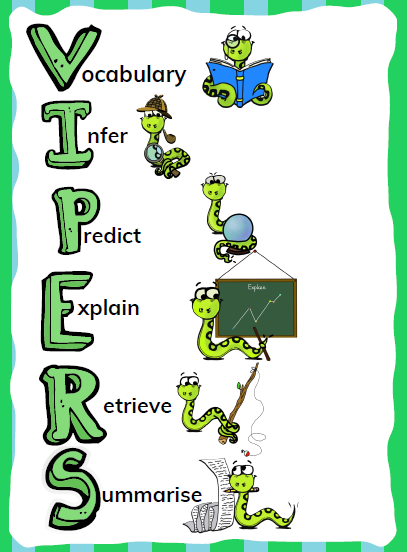
VIPERS
In Key Stage 2 we use VIPERS to teach our whole class reading sessions from a novel, extract, song, poem, non fiction or film clip. Whole Class Reading (WCR) happens 3 times a week in Key Stage 2.
The extracts chosen match carefully with our curriculum themes and support our English texts. We introduced Vipers in Spring 2021 and are already seeing how they support our children in their discussion of the texts studied.
In Key Stage 1 reading activities are matched to the different VIPERS when completing writing build up from quality texts or in our group guided sessions. In the Summer Term, Year 2 progress to WCR although they may complete some whole class reading activities earlier.
Click on the book below to find out more.
VIPERS Parent Information
Year Group VIPERS reading skills
VIPERS Whole School Year on Year

££ Who wants to be a reading millionaire? ££
How long do you think it would take you to read a million words? Our challenge to all our children is to read a million words in a year through our Accelerated Reader program. Our millionaire's parents will be invited in for a celebration assembly where the children will receive a Millionaire certificate and a £5.00 book token! We also have special certificates for children at the half way point of 500,000 words and for children who achieve 90% accuracy in their comprehension quizzes each half term. For those budding readers who become multimillionaires, they have the honour of dedicating a book to our library. A name label will stay inside the cover of that book for generations to witness.
T.I.A Book-et List
Like a bucket list but with books!
It is a list of 100 fantastic books: old and new; classics and recently published, recommended for KS2 children to read before they leave Primary School.
As a school, we believe that reading for pleasure is an integral part of a child’s education. Evidence suggests that children who read for enjoyment every day not only perform better in reading tests than those who don’t, but also develop a broader vocabulary, increased general knowledge and a better understanding of other cultures. In fact, reading for pleasure is more likely to determine whether a child does well at school than their social or economic background.
There is going to be a section in the library specifically for our ‘T.I.A Book-et List.’ These books will have a 100 sticker on the front cover so the children know, when they have finished with the book, to put it back in the correct section and tick it off their list.
Check out our Reading blog! Do you want some recommendations for your next book?
There was an error processing this link (the page was not found).
Writing at Tanworth in Arden
At Tanworth-in-Arden we believe that the best writing comes from children that are engaged, excited and interested in their class topics and themes. All writing at Tanworth is for a purpose and linked with high quality engaging texts. Below are the curriculum expectations for each year group. Teachers are skilled in meeting these expectations in an engaging and meaningful way.
Writing Competitions
Each year group gets the opportunity to enter a writing competition where, if their work is chosen, it will get published in a book! Becoming an author at Primary school is a real achievement and the children are incredibly proud of themselves. You can see the books- that they have been published in- hanging in our library area. Please go and have a read!
Writing Criteria:
Each year group has a different set of criteria that the children should be able to do by the end of the year to meet their age expectation. The children have to show that they can include certain punctuation, layout techniques, spellings and grammatical features into their writing.
Teachers plan the writing so that the build up to a final piece includes lessons on certain grammar or punctuation, that can then be included in that style of writing.
See below the writing objectives for each year group:
National Curriculum expectations for GPS:

We are introducing a fabulous new spelling scheme called SCODE.
What is SCODE & how will it help in my child’s learning?
SCODE is a phonics-based spelling scheme that teaches the National Curriculum spelling requirements for KS2. SCODE gives priority to helping children develop a wide and varied vocabulary. SCODE does this by focusing on:
- Sounds and their codes
- Etymology (the history and origin of words)
- The power of practising
- Teaching spelling in a fun and encouraging way
How can Parents/Carers help encourage their child’s learning with SCODE?
Your child may come home with Super Scoder homework. These tasks are an opportunity for your child to practise what they have learnt in the classroom, they do not introduce new learning. To support your child with spelling at home, there are some videos clips on the link below.
Teachers will upload their class’ sounds and spellings onto their class page, on our website.
Due to the nature of the new scheme, there may be some overlaps in sounds, which have already been taught so please bear with us. However, revisiting these sounds will only benefit the children and help to further embed the learning.
Mathematics at Tanworth-in-Arden Primary
White Rose Maths
At Tanworth, we follow the White Rose Primary Scheme of Learning.
Through the use of the White Rose scheme, we aim to build a culture of deep understanding, confidence and competence in maths in order to produce strong, secure learning and real progress.
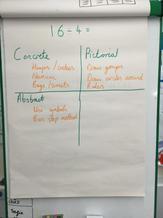
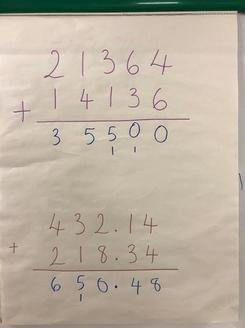
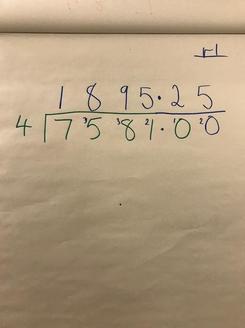
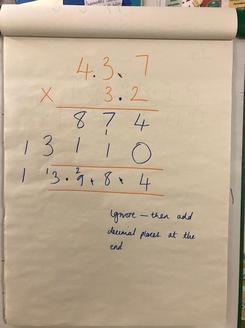
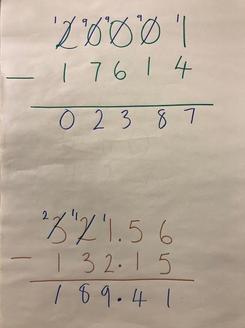
Not only do we teach children the methods to solve calculations, we explore the thinking behind them - the reason why they work. We develop children's understanding by using a combination of concrete resources and pictorial representations alongside the abstract methods.
Our aim is to create happy and resilient mathematicians who relish and enjoy the challenge of maths. We want children to become independent and reflective thinkers, whose number fluency, reasoning and problem solving skills support them in other areas across the curriculum.

What does maths at Tanworth look like?
Cross-curricular maths
Across school, we are developing the use of our maths skills in other areas of the curriculum. This helps children to see the value of these skills and understand their importance. It also gives children further opportunity to practise and embed skills outside of maths lessons and reinforce learning across year groups.
Take a look at some of the cross-curricular maths activities happening - from using Venn and Carroll diagrams to sort criteria and information in RE and science, to using PE skills in relay races and scavenger hunts, to drawing portraits in art using proportion or creating timelines in history - we are thinking carefully about how to provide opportunities for children to see that maths skills are life skills and relevant to a whole host of different situations!
What do the children think about maths lessons at Tanworth?
Calculation Policy
Times Tables
Knowledge and understanding of times tables and their corresponding division facts is an important area of learning within the maths curriculum. We aim for children to have both a procedural and conceptual understanding of times tables. Not only do they need to know tables by rote and develop fluent recall of number facts but they also need to understand what times tables mean and what these number facts represent. This will help children when they reach year 6 as they will be able to spend more time on problem solving and less time on calculating.
In accordance with the national curriculum, children are expected to know their times tables up to 12 x 12 by the end of year 4.
To support this, children will regularly practise times tables in maths lessons and every Friday, children from year 3 - year 6 (and Year 2 in the Summer term) will have a short test. The focus of these tests is on beating their best score and they are designed to engage and excite children, challenging them to gain a new personal best!
The content of the tests is based on guidance from the NCETM (The national centre for excellence in the teaching of mathematics) about which tables and number bonds children should know as they progress through school. (See below)
NCETM guidance
Munch 'n' Maths
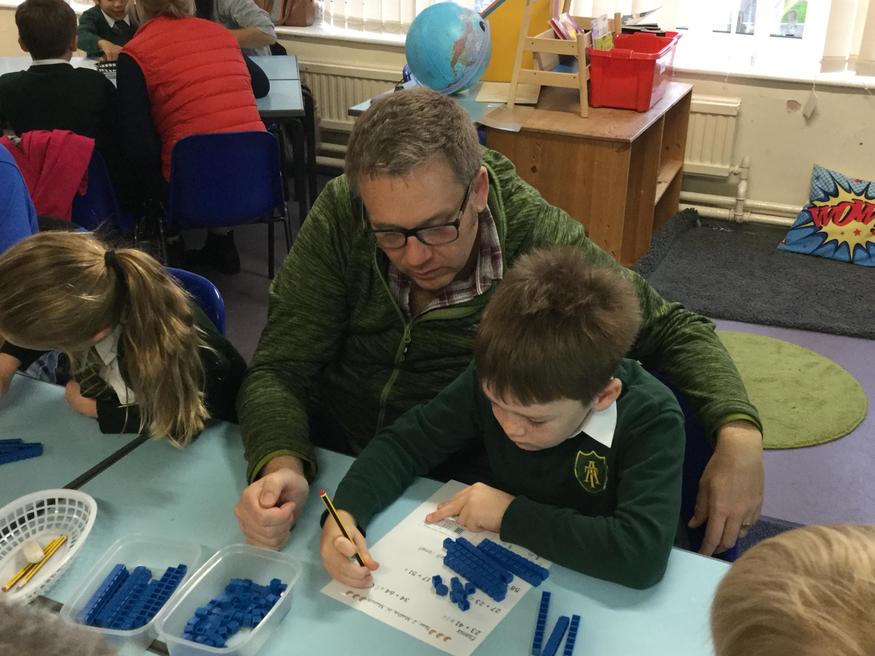
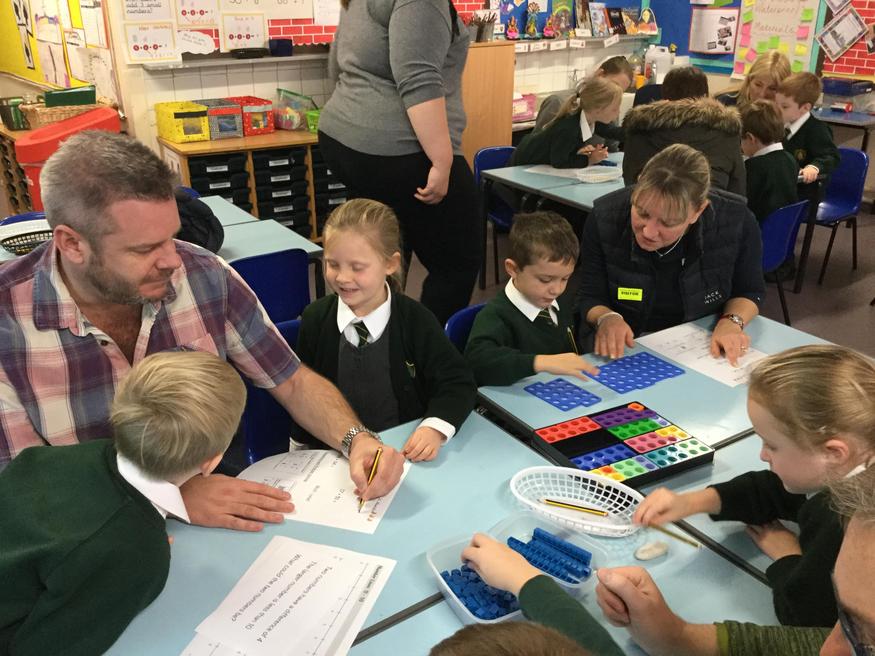
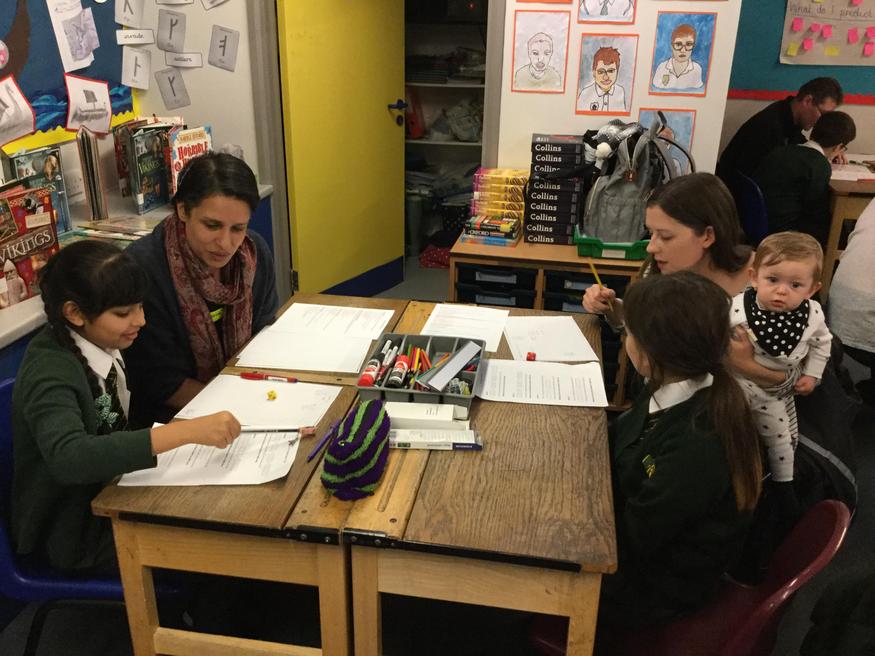
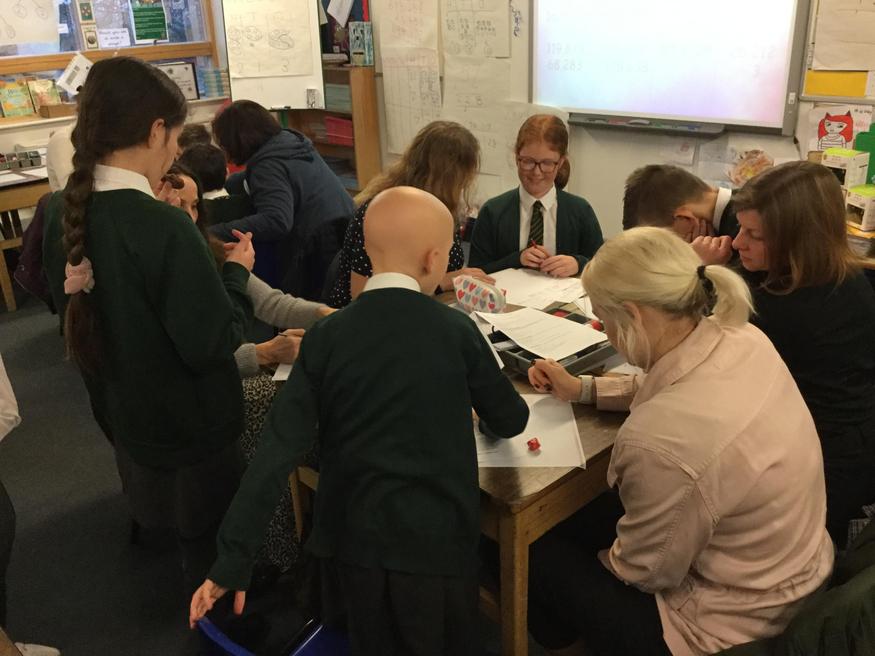
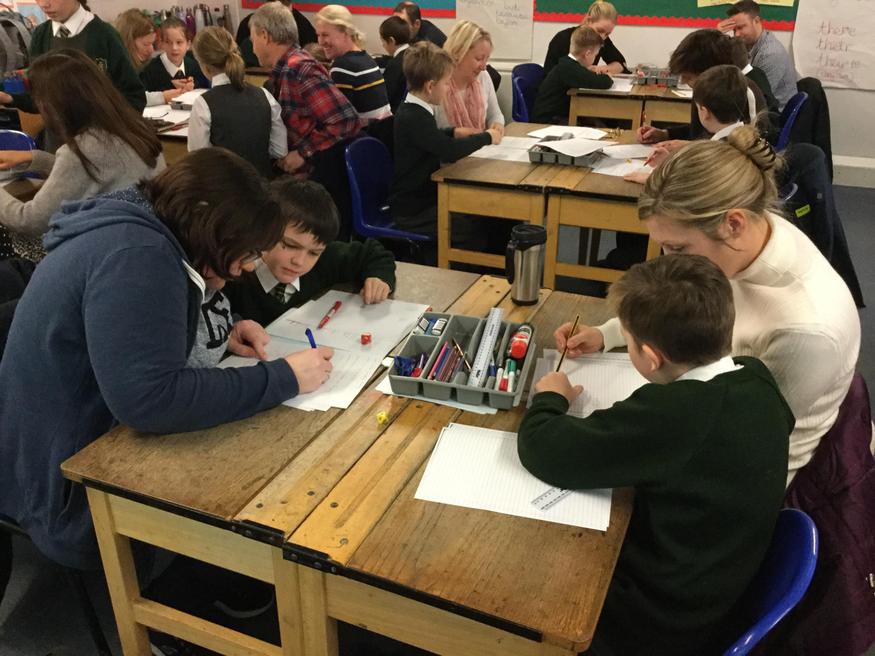
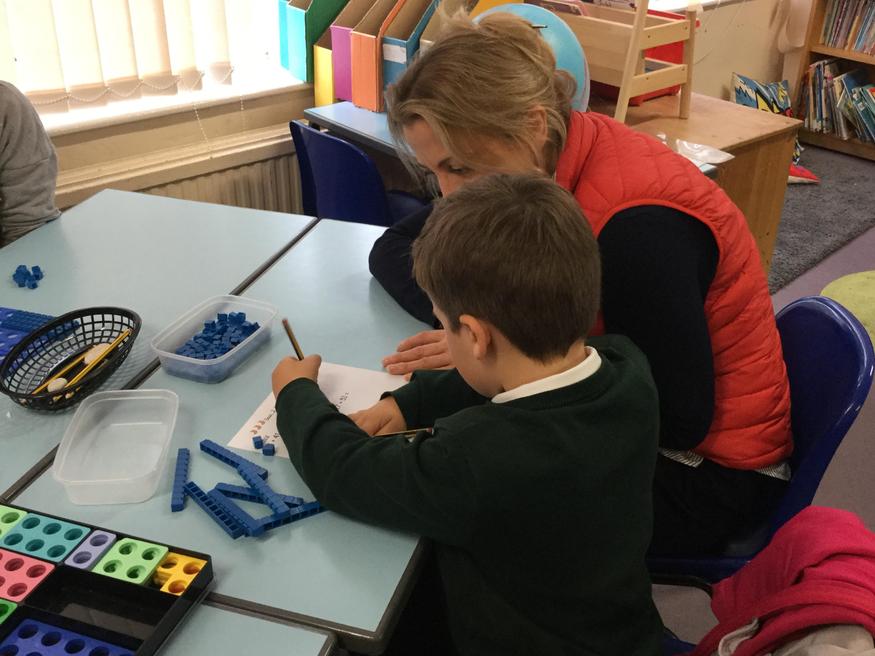
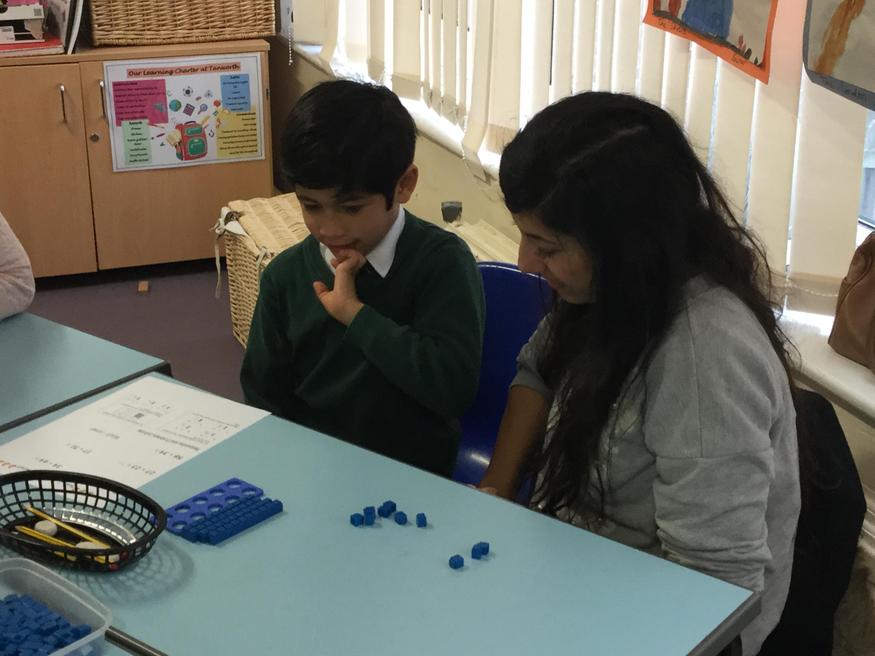
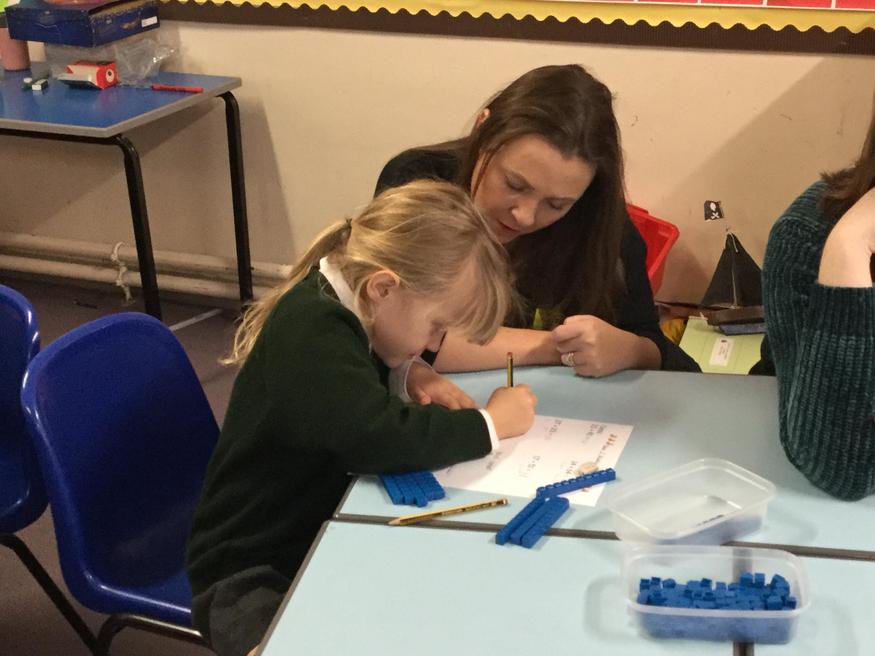
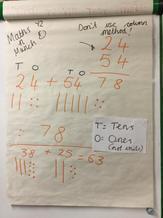
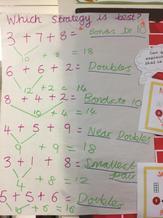
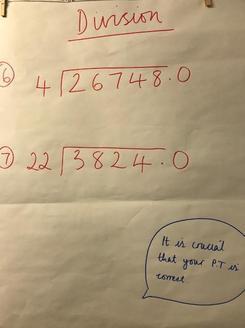
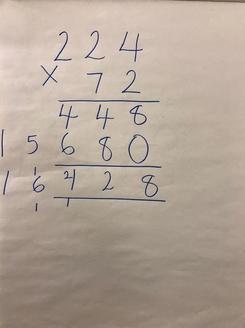
Parents were invited into school to attend a maths workshop. Each workshop was lead by their child's class teacher and parents spent part of the session learning about and discussing strategies and methods that their children are using in school during their maths lessons. Children then joined their parents and explored a variety of calculations and problems designed to let them (and their parents!) try out their maths skills!
The workshops were well attended and it was lovely to see so many parents in school! Thank you for your support and feedback!
Feedback
100% of parents who completed feedback forms agreed with the following statements:
- I found today’s workshop useful
- I have a better understanding of the expectations for my child’s year group
- I have a better understanding of how to support my child with maths
- I’m glad I came
- I would like to do more of this type of event
81% of parents strongly agreed with the above statements.
What were the best things about the workshop?
- “having the opportunity to learn about how the children are learning and work with them in school”
- “It was lovely to see my child so excited about learning!”
- “Lots of useful tips for supporting children at home”
- “seeing how well my child is doing in maths first-hand”
- “learning new terminology and how my child is taught, not how I was taught”
- “relaxed atmosphere… informative and useful sessions... fun, clear and concise delivery
What could be improved?
- “information available about where to purchase certain resources”
- “more sessions – maths, reading, grammar”
- “opportunity to attend sessions more often”
- “different year groups on different days in case you have a child in both”
- “more notice about when the workshops will be”
- “more space because it was so popular!”
- “more time to spend with my child”
Your feedback has been invaluable and we take all points into account. Keep an eye on the newsletter for information about future events!
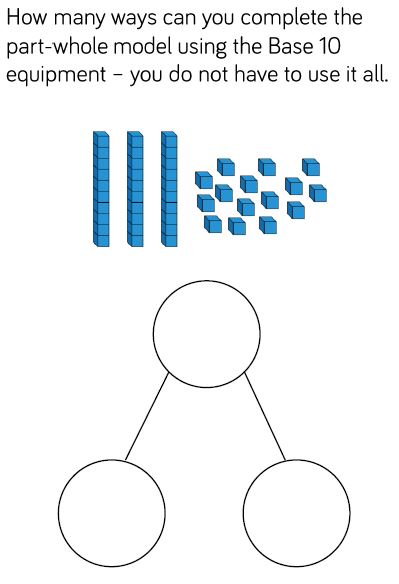
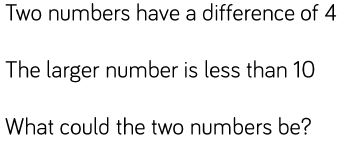
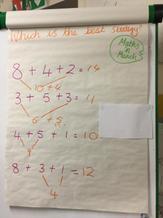
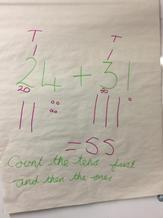
What was covered at Munch 'n' Maths?
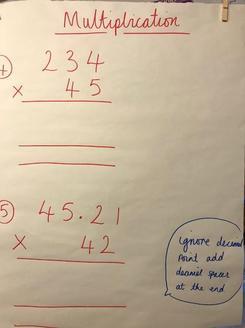
Religious Education
We are proud of our RE here at Tanworth in Arden and our mixture of teaching and exploration of the Christian faith and other world faiths. Children are encouraged to enquire, discuss and relate what they have learnt to their experiences and those of others.
We have strong links with the church and a programme of educational visits which mean that children will have the chance to experience places of worship and traditions of all the main world faiths as they prepare for the next stage of their life.

RE around the school
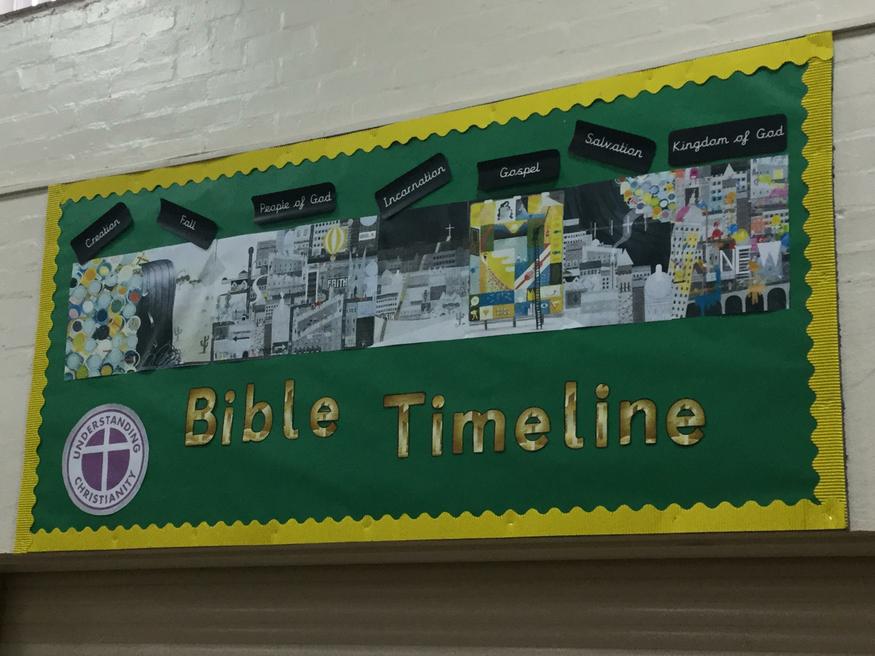
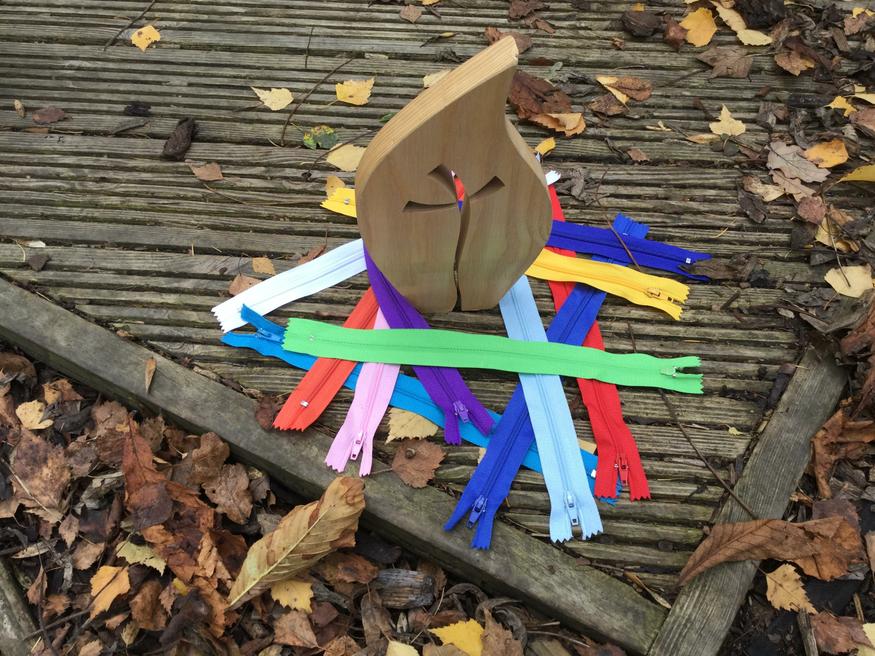
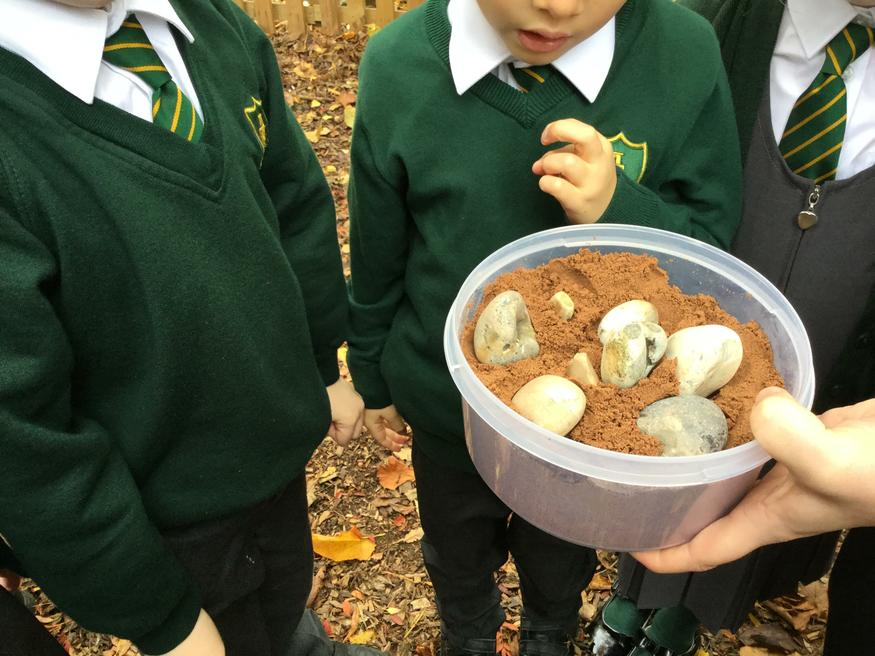
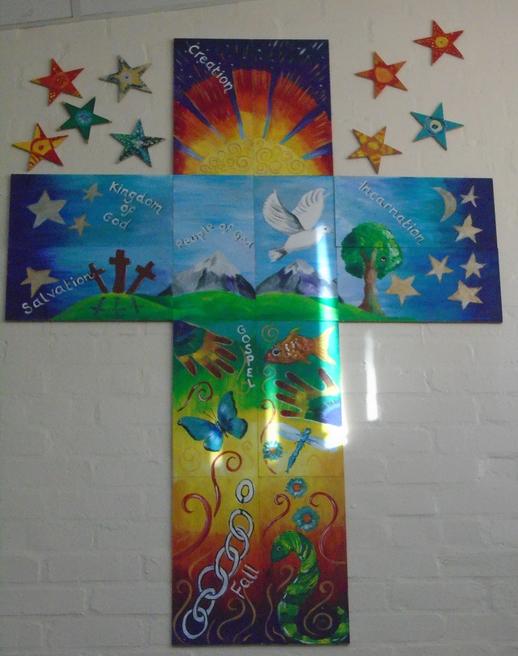
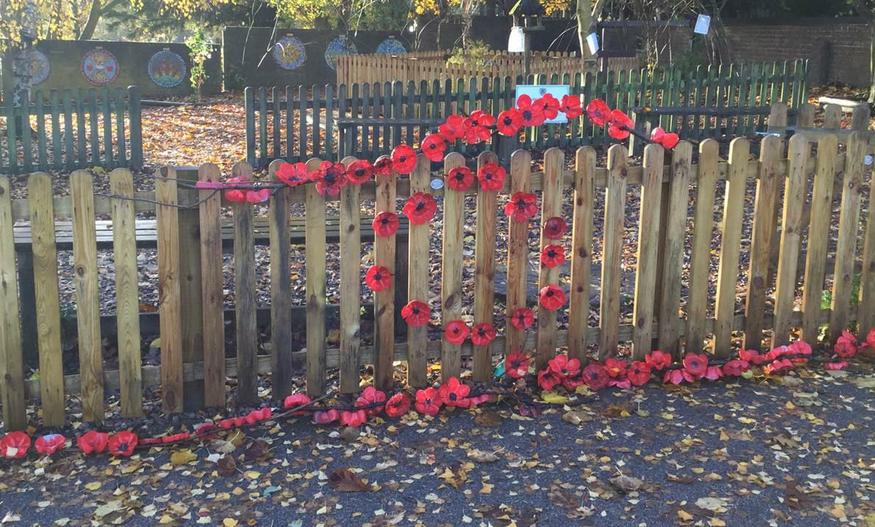
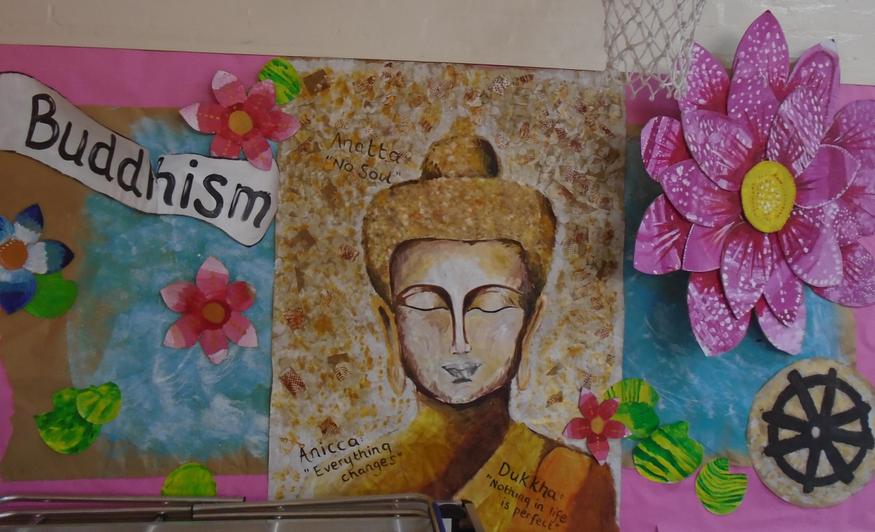
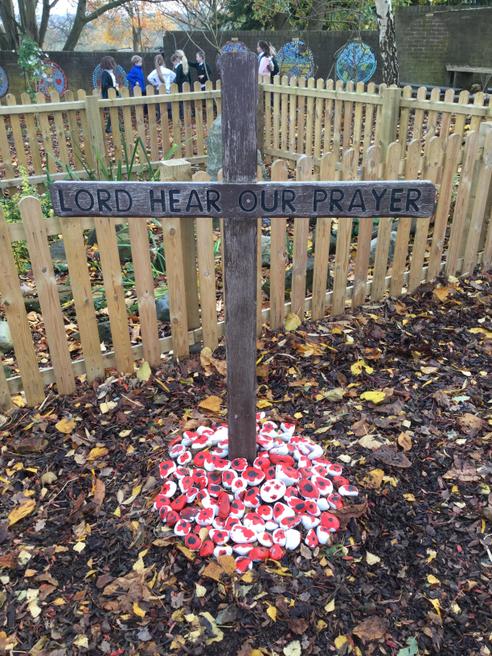
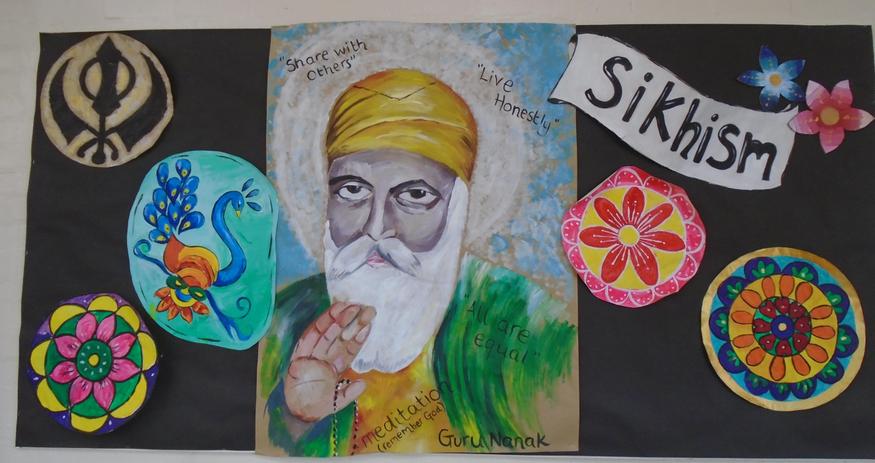
Long Term RE Plans - Please have a look at the RE plans so you can see what your child is covering and at the moment. We use a combination of resources from 'Understanding Christianity' and the Coventry and Warwickshire RE Syllabus.
OUR FAITH & SIAMS
You can find further information about our life as a Church of England School, our different Collective Acts of Worship and our faith by following this link to the 'Our Faith and SIAMS' section of our website.
History curriculum intent
History helps pupils to understand the complexity of people's lives, the process of change, the diversity of societies and relationships between different groups. It also helps children gain a sense of their own identity within a social, political, cultural and economic background.
Implementation
History skills and vocabulary progression
Impact

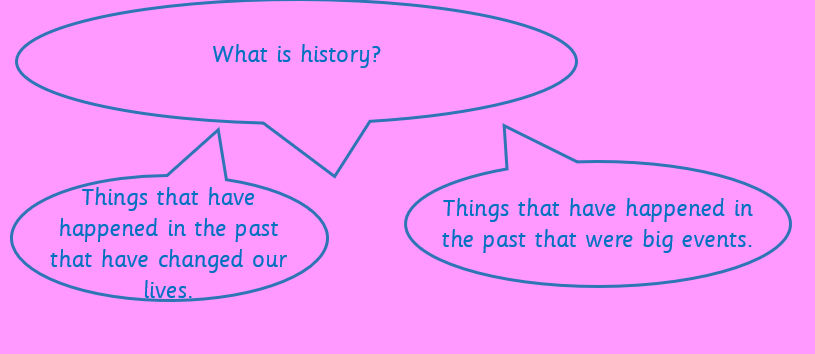
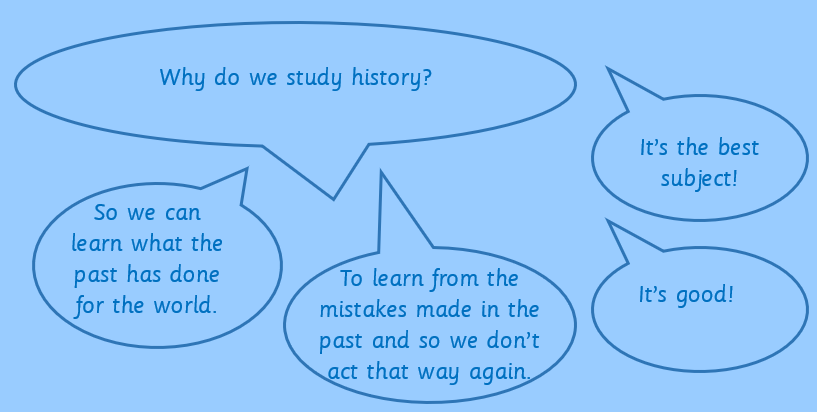
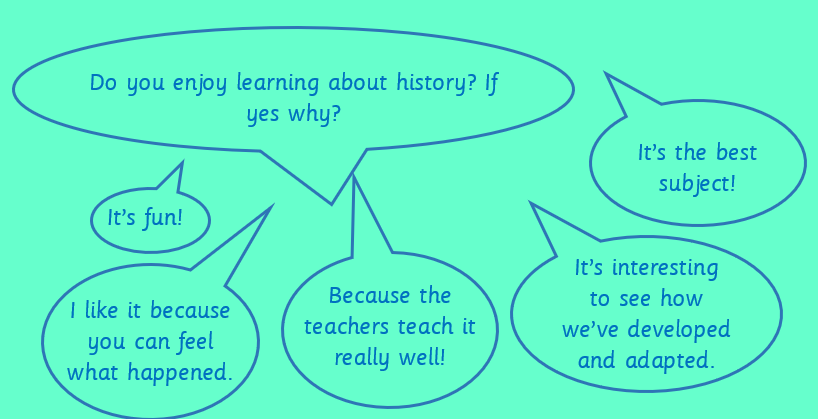
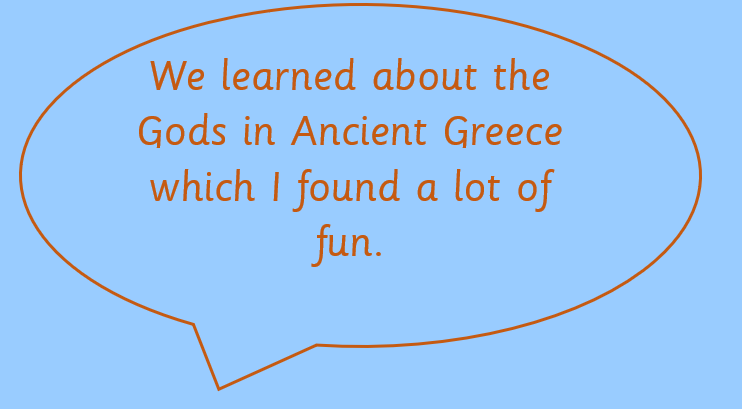
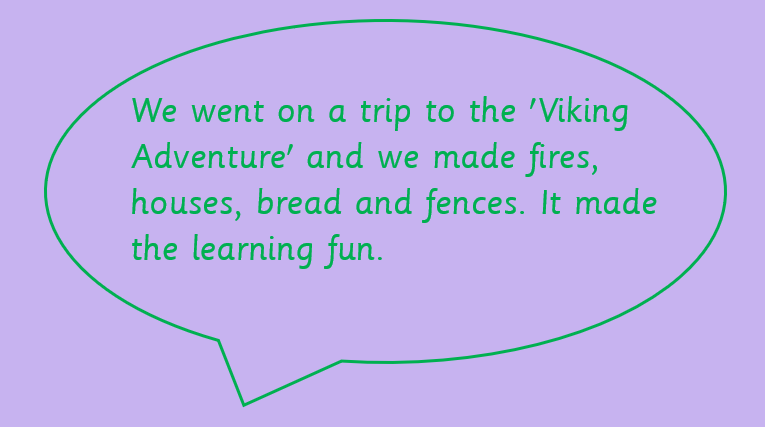
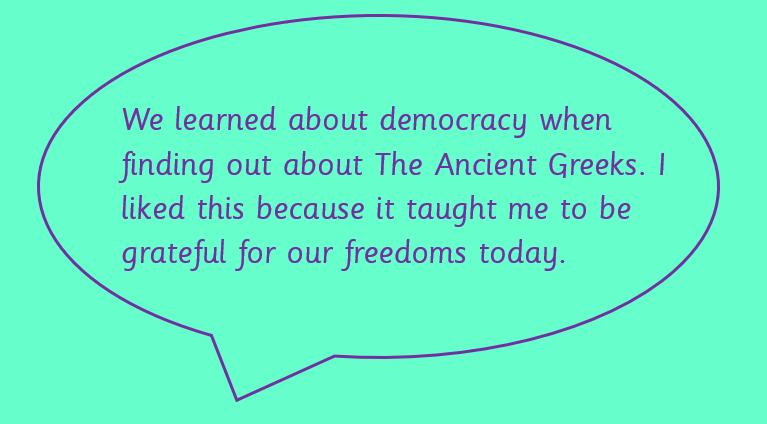
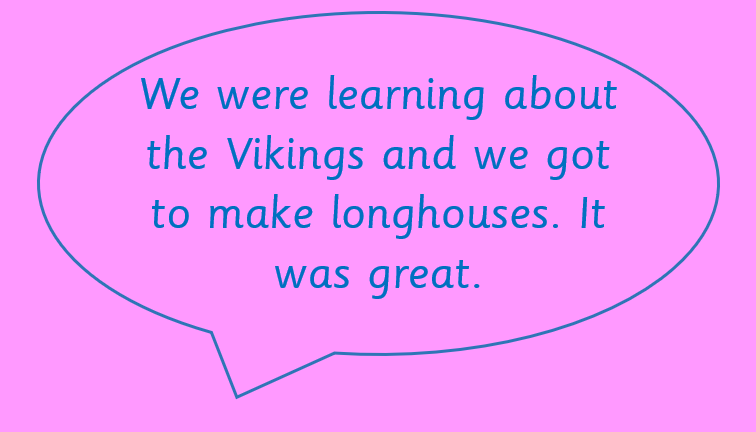
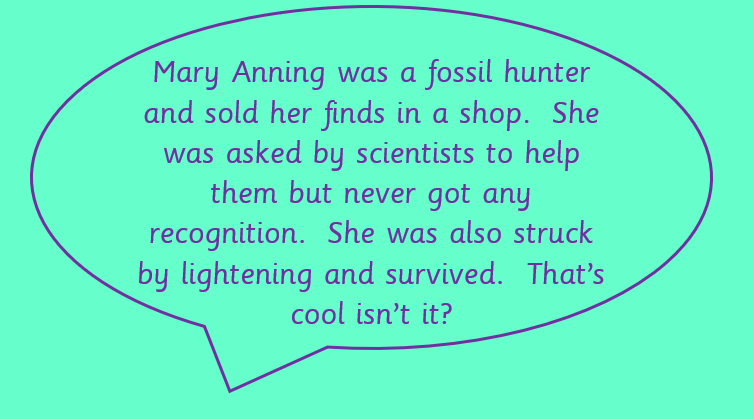
What do the children say about History at Tanworth?
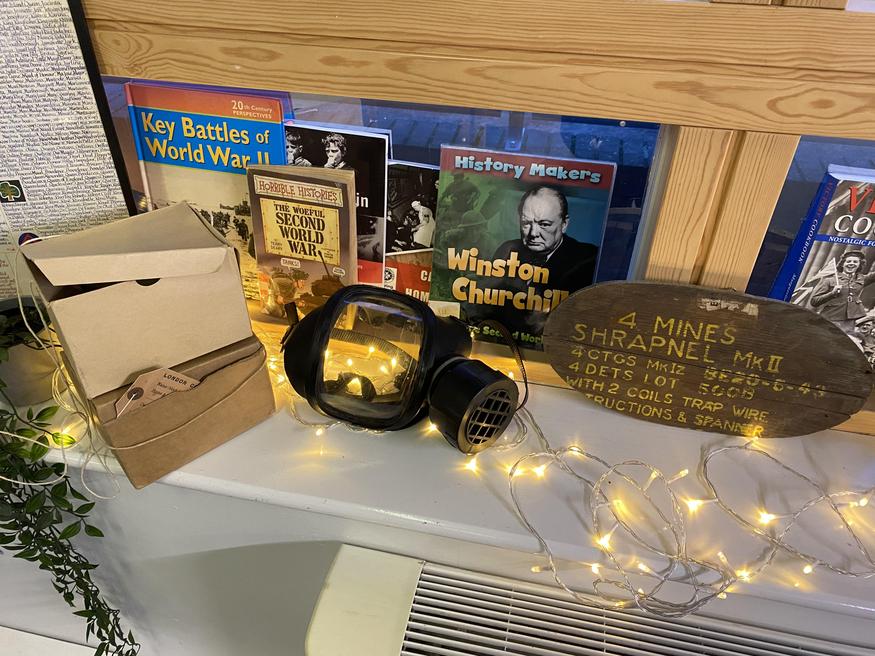
History on Display
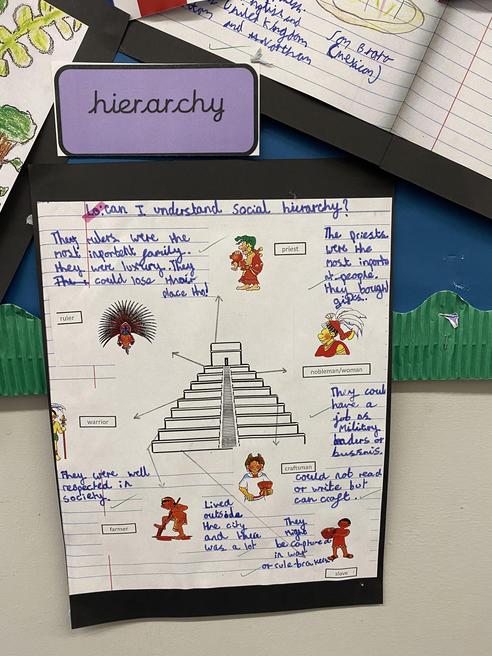
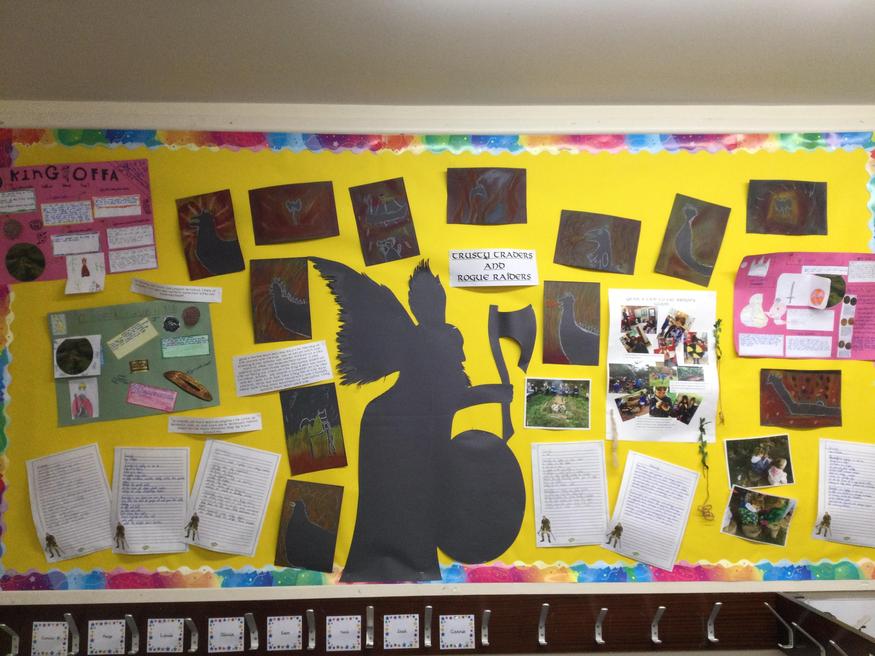
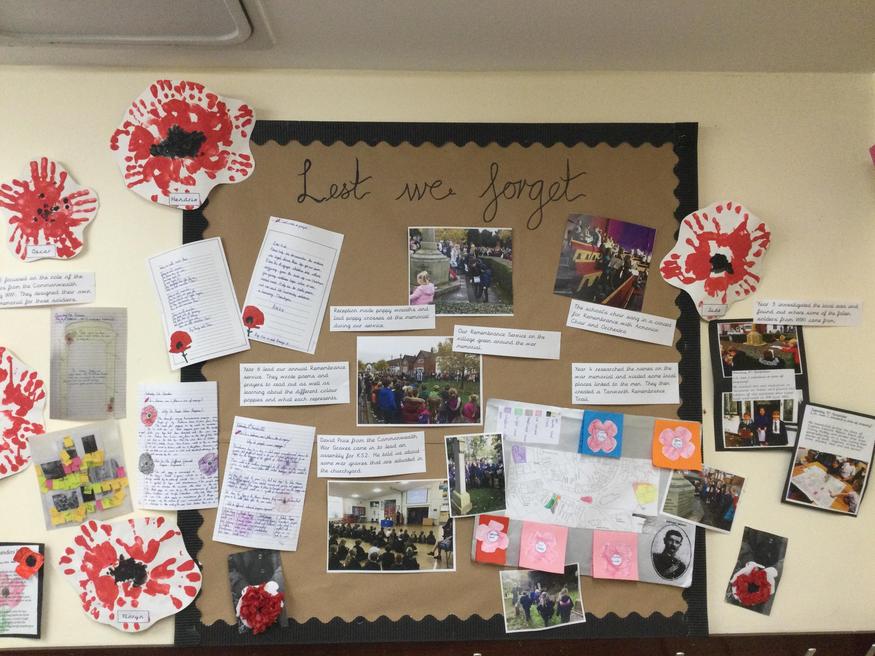
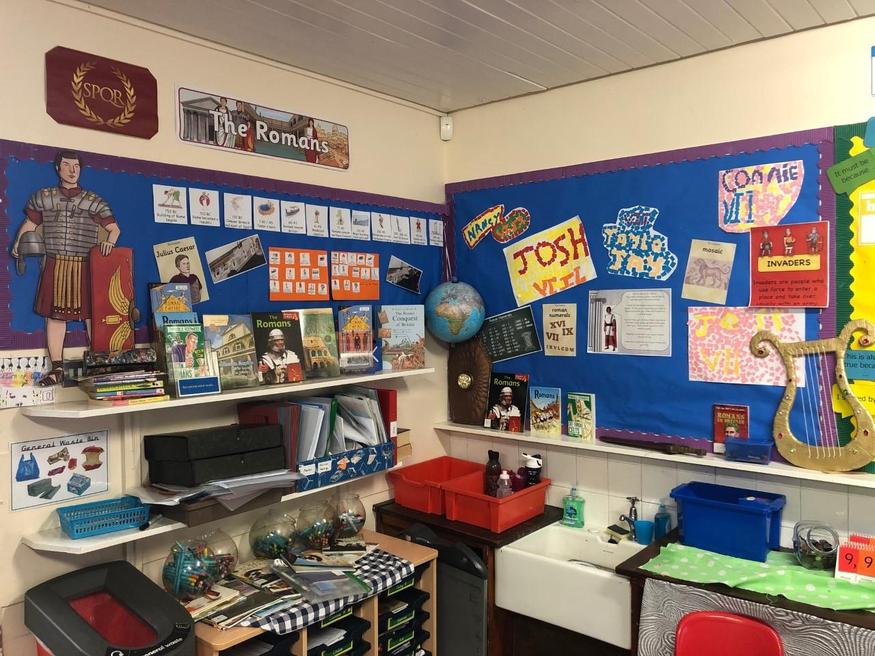
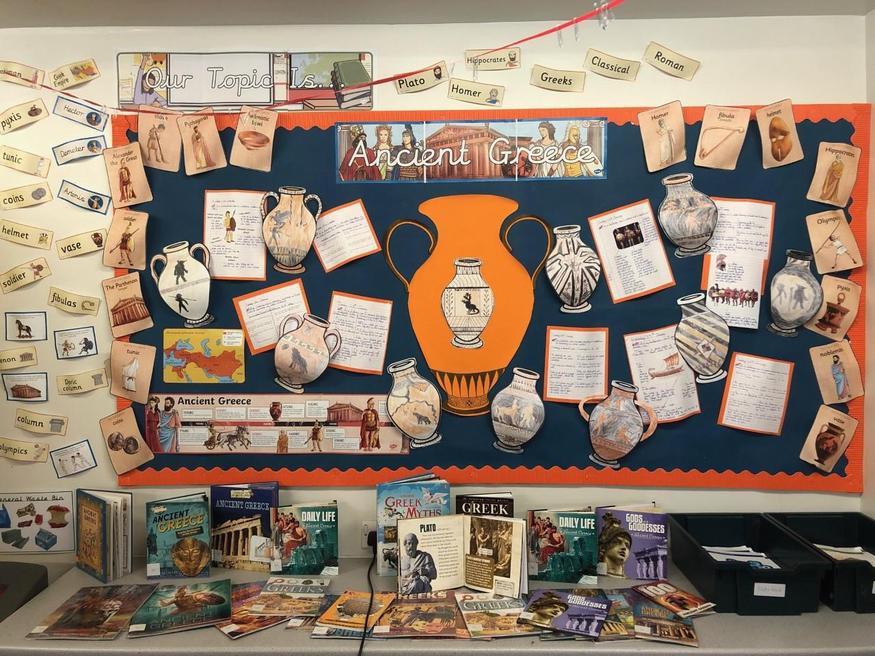
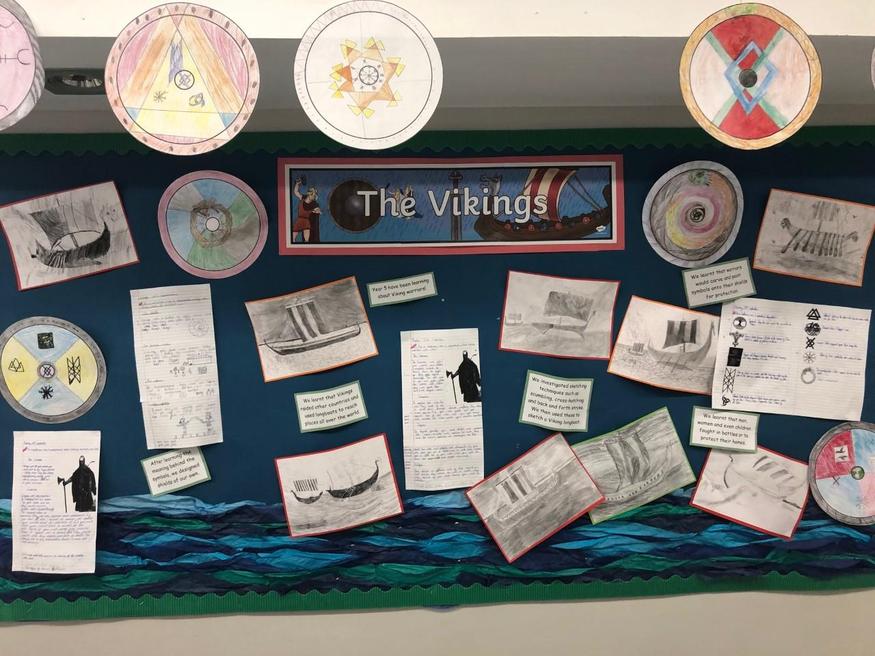
Children's work
Black History month presentation
Enriching the list
The History Detectives have been hard at work after school! They have been investigating which locations in Tanworth are on the list of listed buildings. There have been great debates over whether some places should be listed or not! We have gone out into the village, found the places on the marked on the map, taken photos and once we were back in school have made sketches of the listed locations. The place listed in Tanworth are not just buildings however, they also include tombs and a telephone box!
Archaeologist's visit
History Detectives lead assembly to celebrate International Women's Day and Women's History Month!
Women's History Month powerpoint and script

This week at Tanworth classes have focussed on Remembrance and what it means. Over the course of the week classes have been delving into history to discover why we still remember 103 years after the end of WWI. Nursery and Reception have been busy painting poppies and wreaths, whilst Year 1 made a trip to the War memorial on the village green so they could see where our act of Remembrance takes place. Year 2 have developed their historical knowledge further by focussing on a significant individual from Britain’s past. Sir Walter Tull was the first black professional footballer and is still remembered at Tottenham Hotspur, the club he played for. But he wasn’t just a footballer, he was also the first black officer in the British army, sadly he died fighting in the Battle of the Somme. Year 3 and 4 have been looking at soldiers closer to home and visited the war memorial to find out the names of the men who died from Tanworth during WWI. Year 3 looked at where some of these men lived and mapped out their timelines on a map of the local area, whilst Year 4 created a Remembrance trail of Tanworth so people can visit the significant places in the village linked to WWI. These places include the White House, Whalebone Cottage, the war memorial and the churchyard. In Year 5, they have been busy looking at the role of soldiers from the Commonwealth and how they also fought in the war. Our wonderful Year 6 have also been working incredibly hard not only focussing on why we have different coloured poppies but also writing poems and prayers for our Remembrance Service.
The learning didn’t stop with the classes and the taught curriculum however, on Monday after school The History Detectives also visited the War memorial to complete a conditions survey on the state of the memorial. This has now been sent to the War Memorials Trust for their records so they know what sort of condition the Tanworth memorial is in. They also went in search of the three war graves in the churchyard, we found one WWI war grave, belonging to George Vince who died at the age of 19 and two WWII war graves, one of which belonged to a Battle of Britain pilot. KS2 were also extremely fortunate to be able to attend an assembly on Tuesday lead by a volunteer, David Price, from the Commonwealth War Graves Commission. David was able to explain to the children in an informative and engaging way what the Commonwealth War Graves Commission is, what they do and why they are important. He also told the story behind the war graves of Tanworth. On Wednesday, our amazing school choir visited Warwick Arts Centre and performed a Remembrance piece called ‘The Armed Man’ alongside other schools, a professional choir and orchestra in a concert for Remembrance! It was an amazing performance where all the children sang their hearts out and I’m sure will be remembered by all children and parents who attended. Finally, Remembrance week culminated on Thursday 11th November with our traditional Remembrance Service. It was wonderful to be able to hold the traditional service this year and Year 6 did a fantastic job of leading the service for the rest of the school, reading their poems and prayers and helping Reception class to lay their poppies on the War Memorial.
Examples of our work from Remembrance Week
Year 6 at RAF Cosford
Visit to Cadbury world linked to the study of The Maya
Viking life
Saxon village life
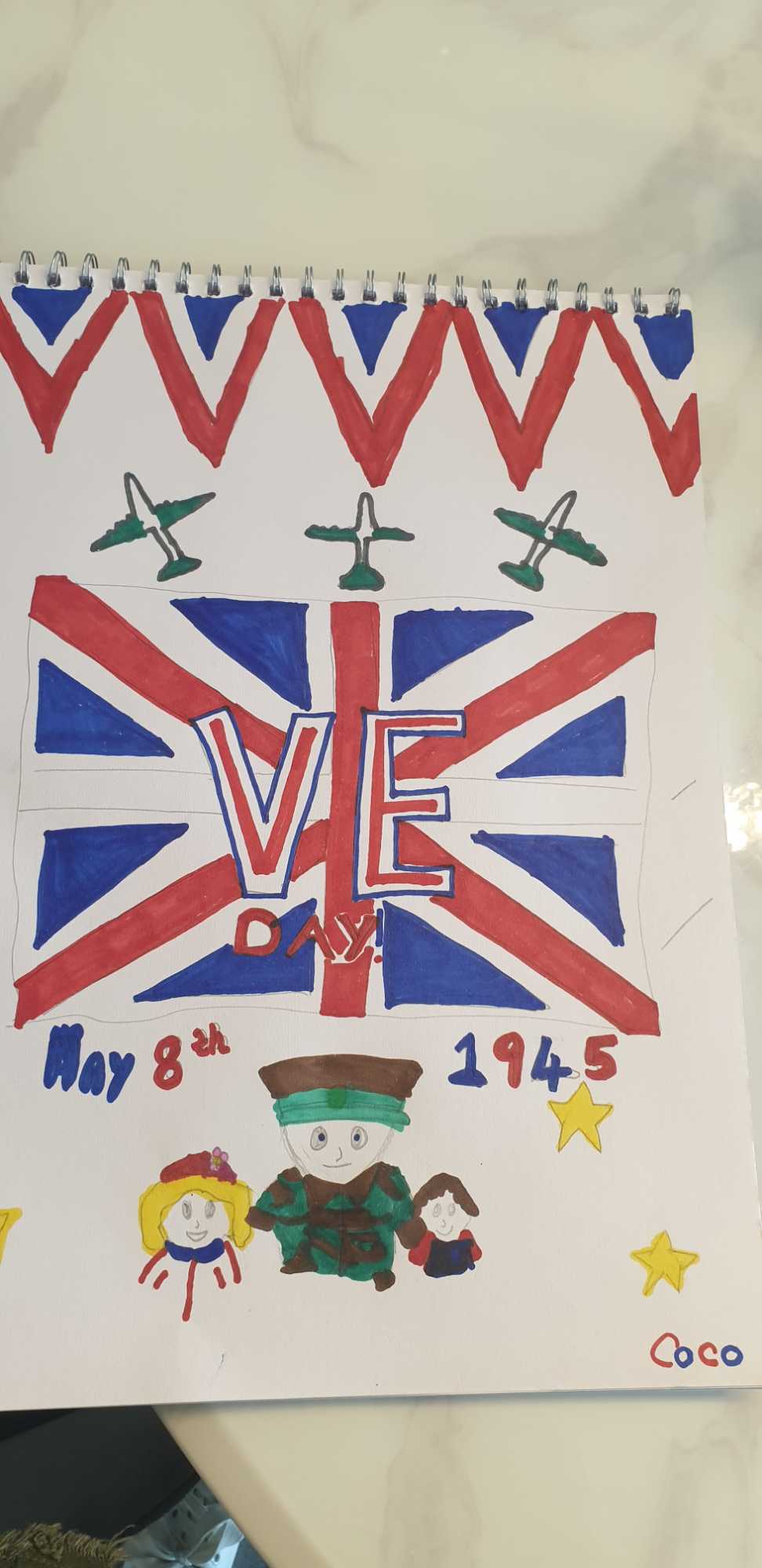
The 75th anniversary of VE Day took place during the Covid-19 lockdown. This is how our children celebrated this special event whilst staying safe at home.
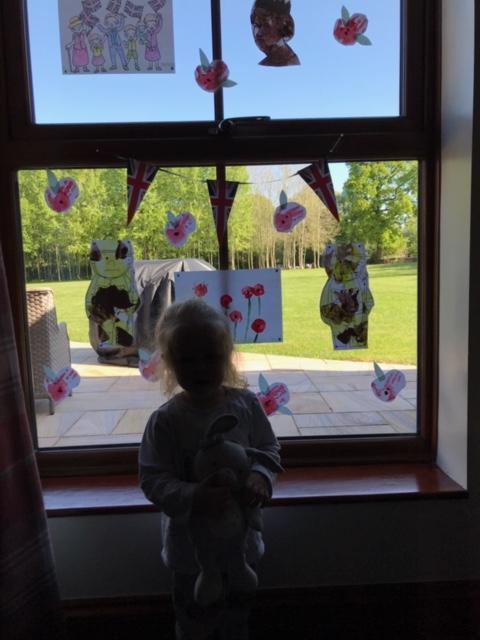
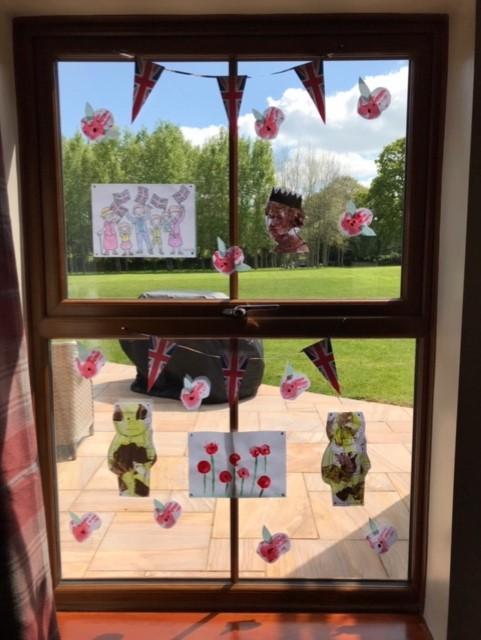
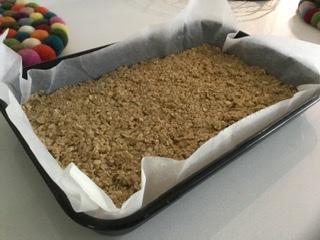
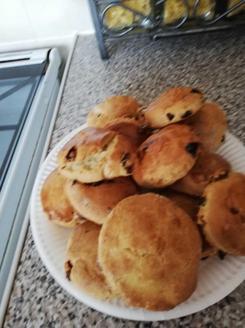
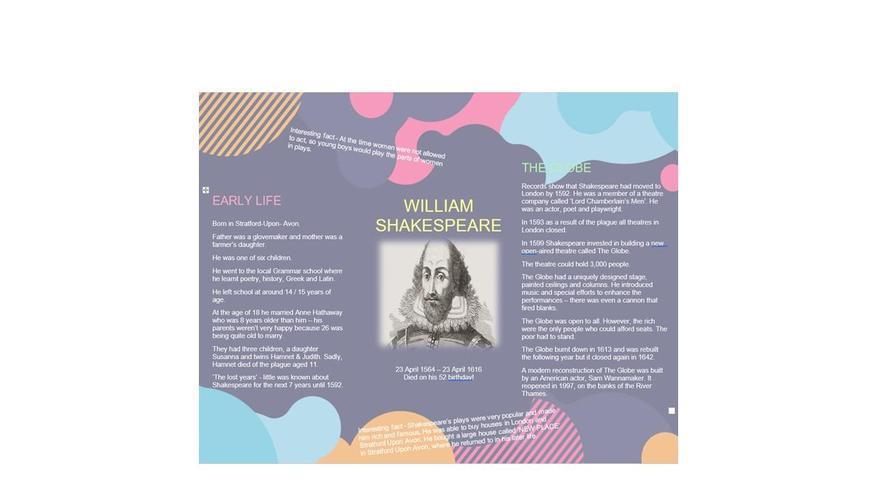
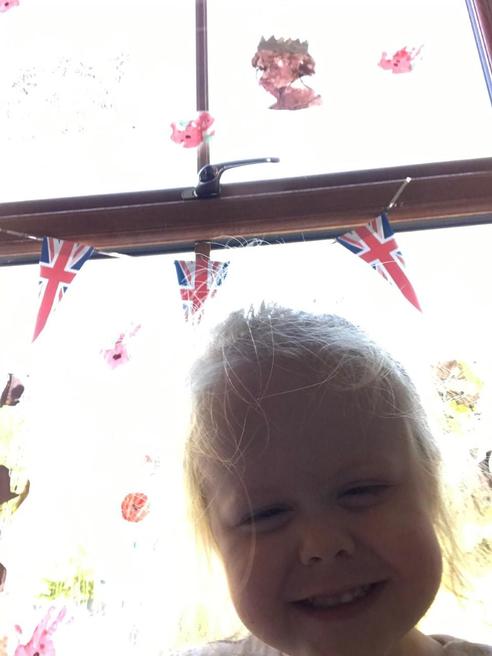
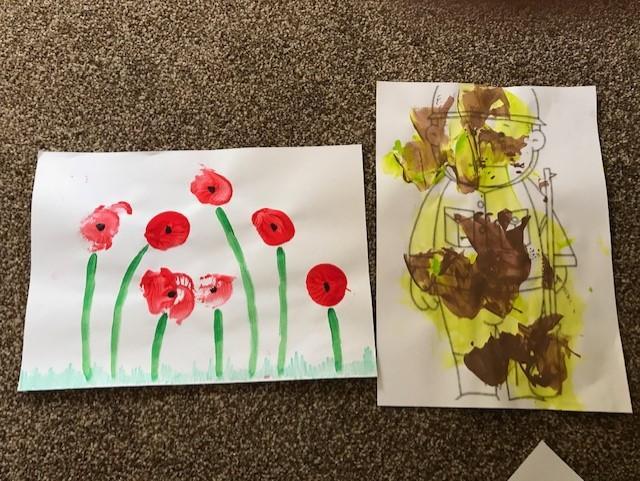
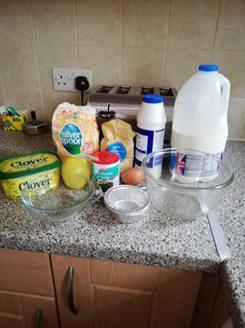
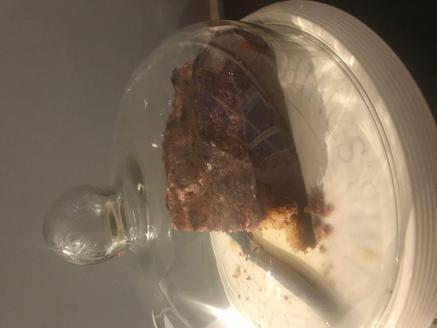
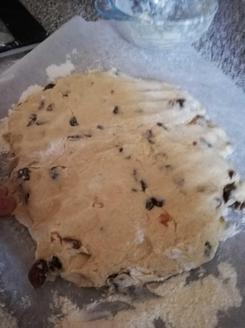
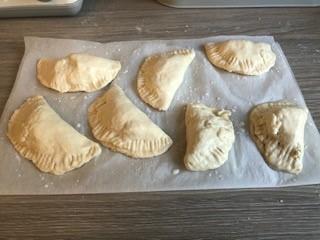
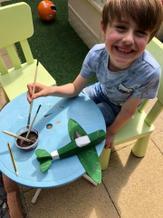
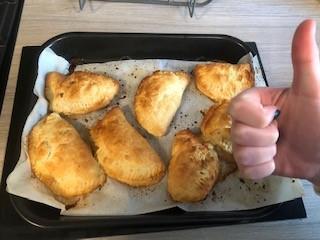
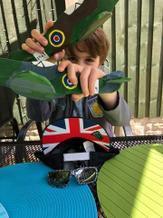
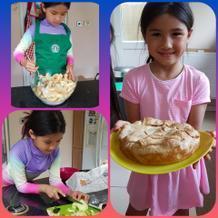
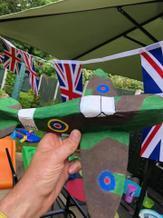
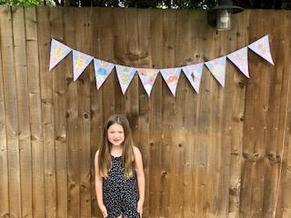
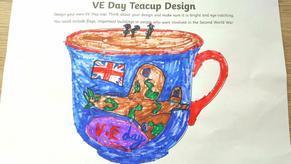
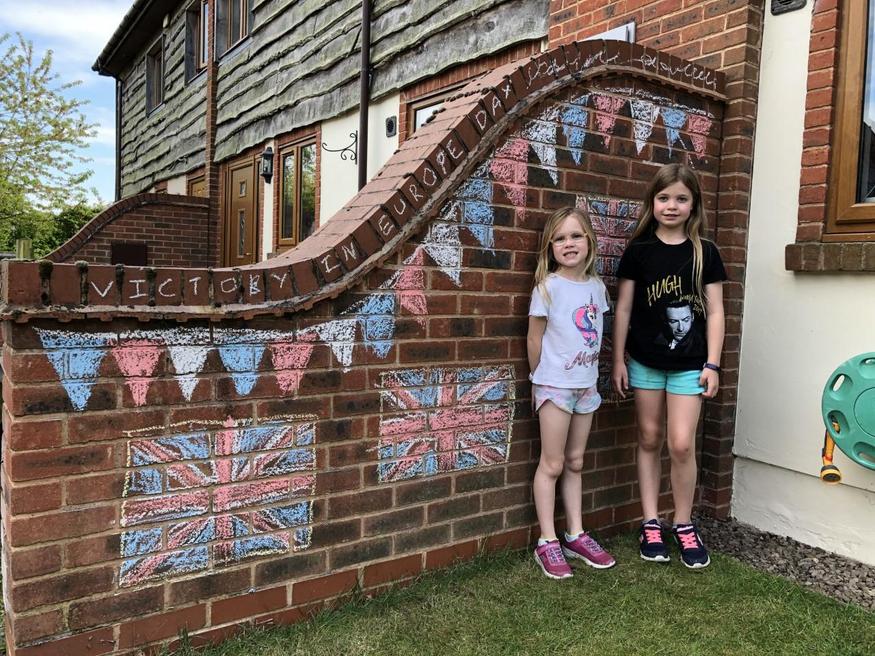
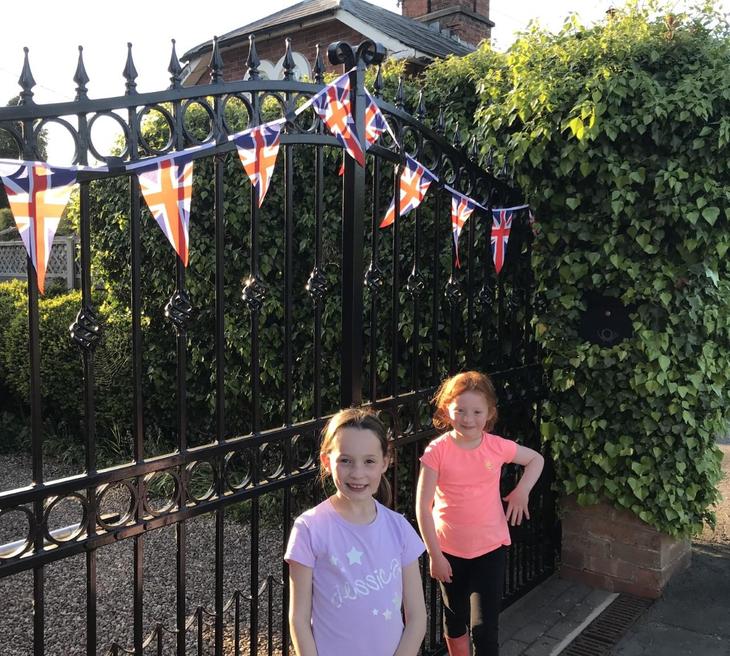
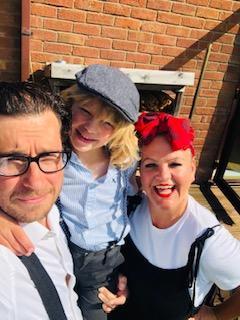
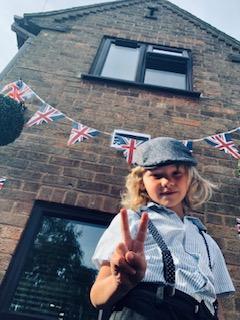
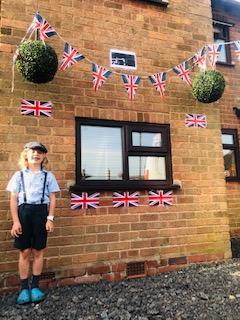
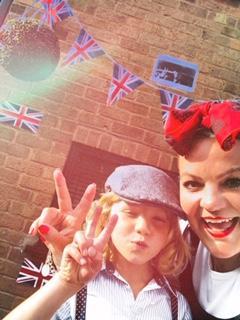
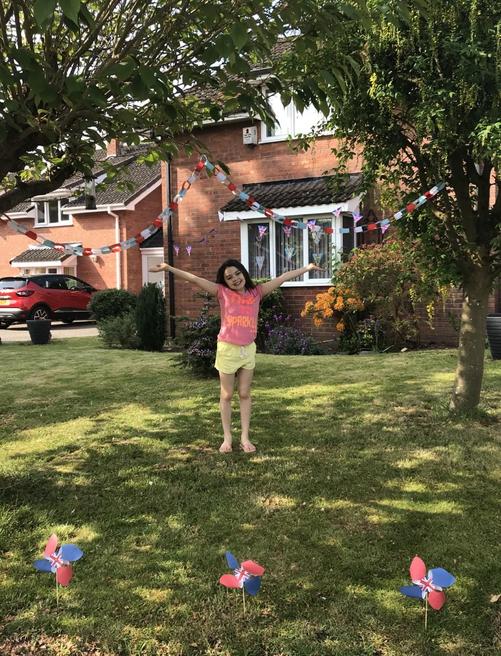
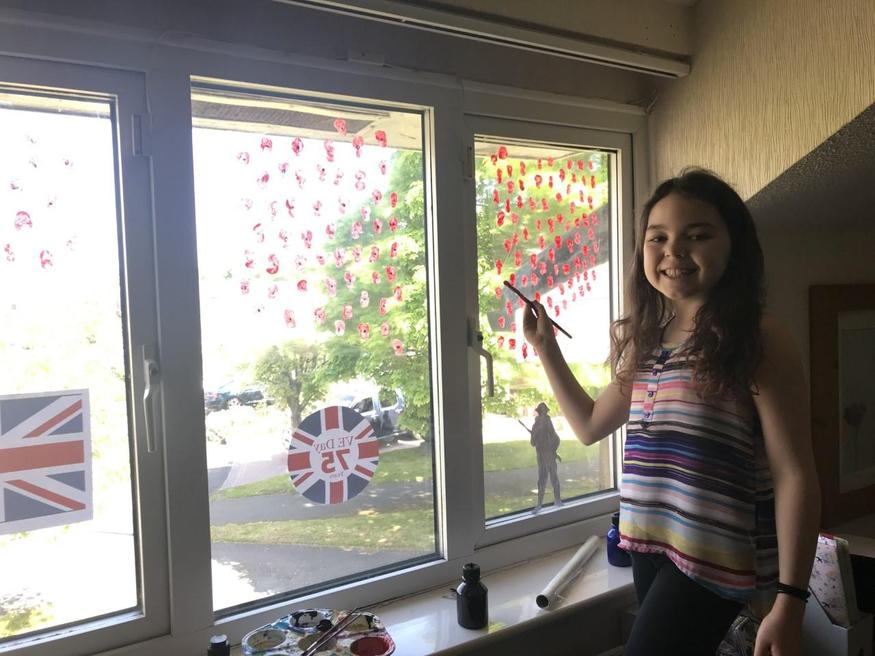
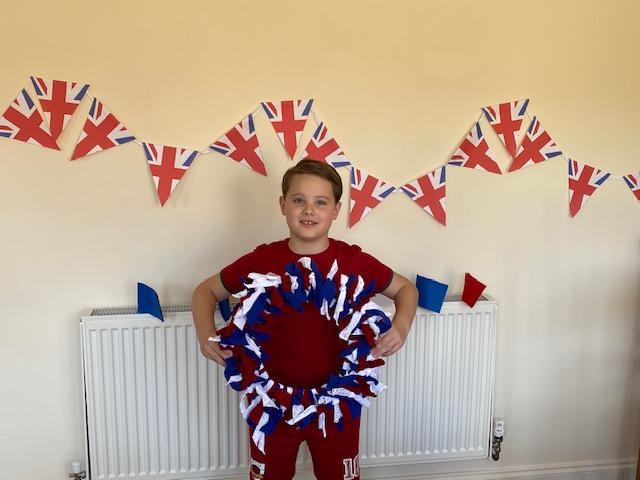
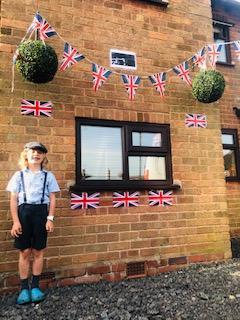
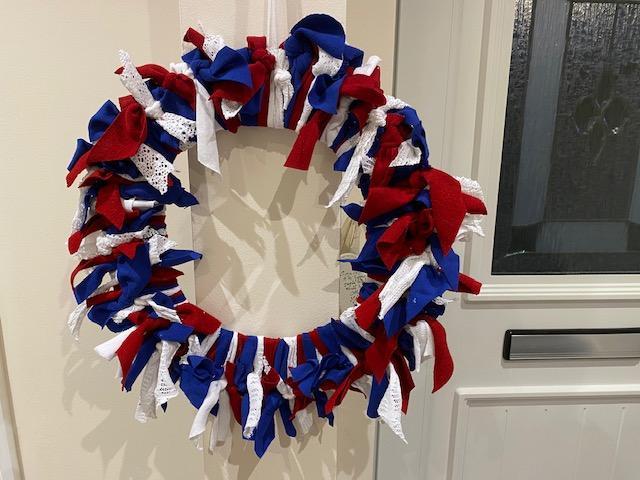
Mrs Hoskins set a VE day challenge, click the link below to find out what it was:
Take a look at the completed challenges below, we clearly have some fantastic historians at Tanworth!
Comments from children:
Arthur, Year 5: I really enjoyed VE Day on Friday. I found out some interesting things about what my Great Grandparents did in the war and enjoyed talking to my Nan about it on Facetime. I also eating enjoyed the Victoria Sponge cake we baked!
Amba, Year 5: I found out for VE day that my grandads uncle was a prisoner for 5 years in Japan and helped the indian people on the world today I am very proud of my family history.
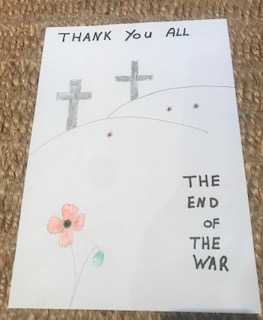
Other work completed as part of Home Learning:
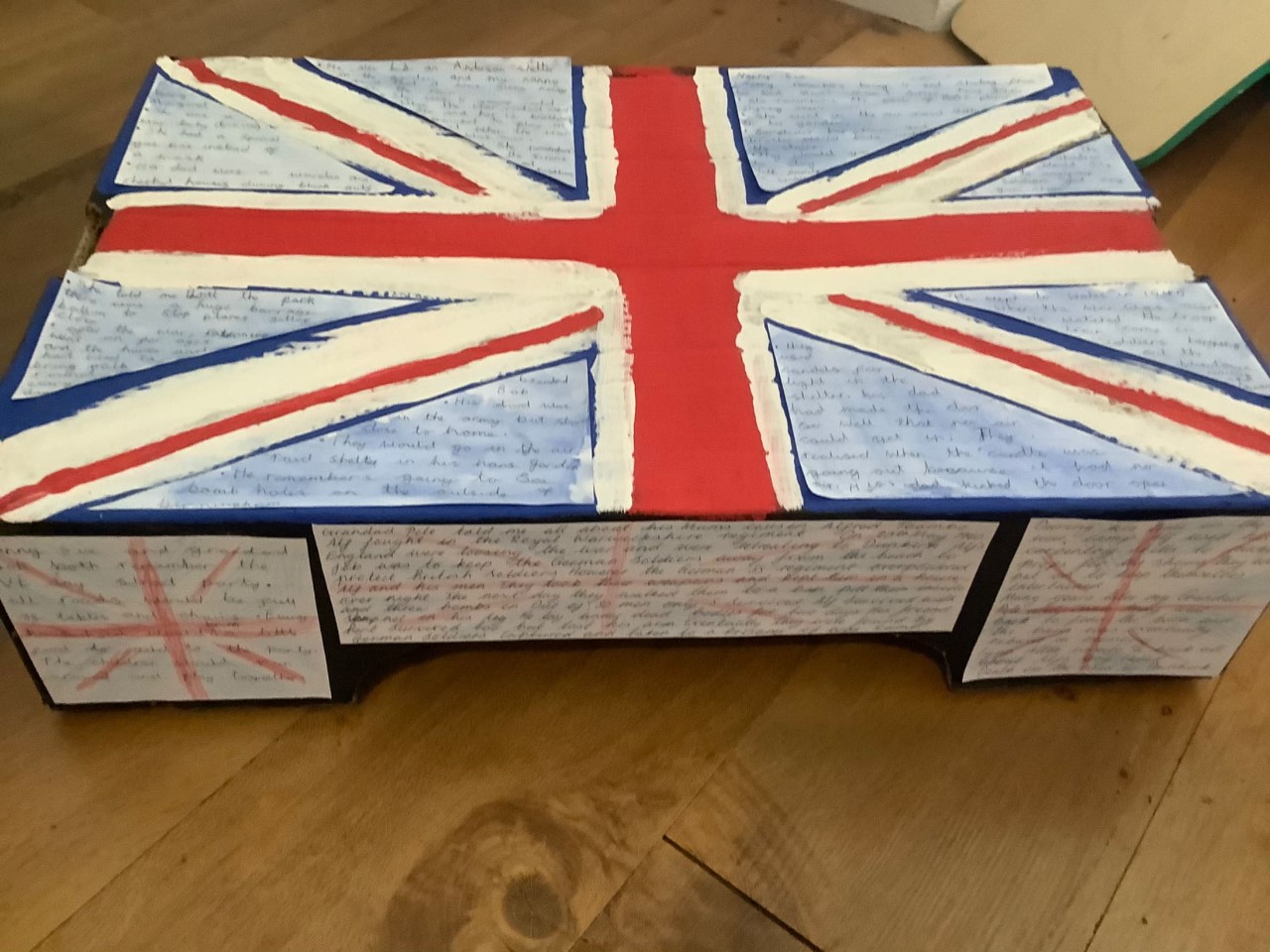
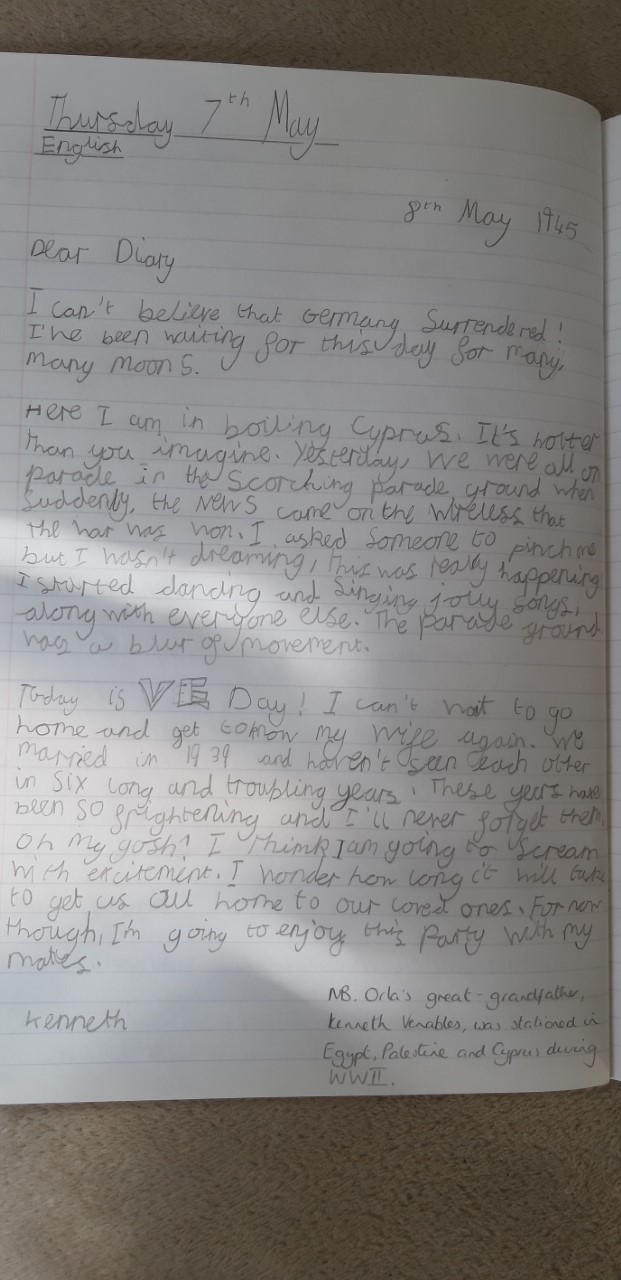
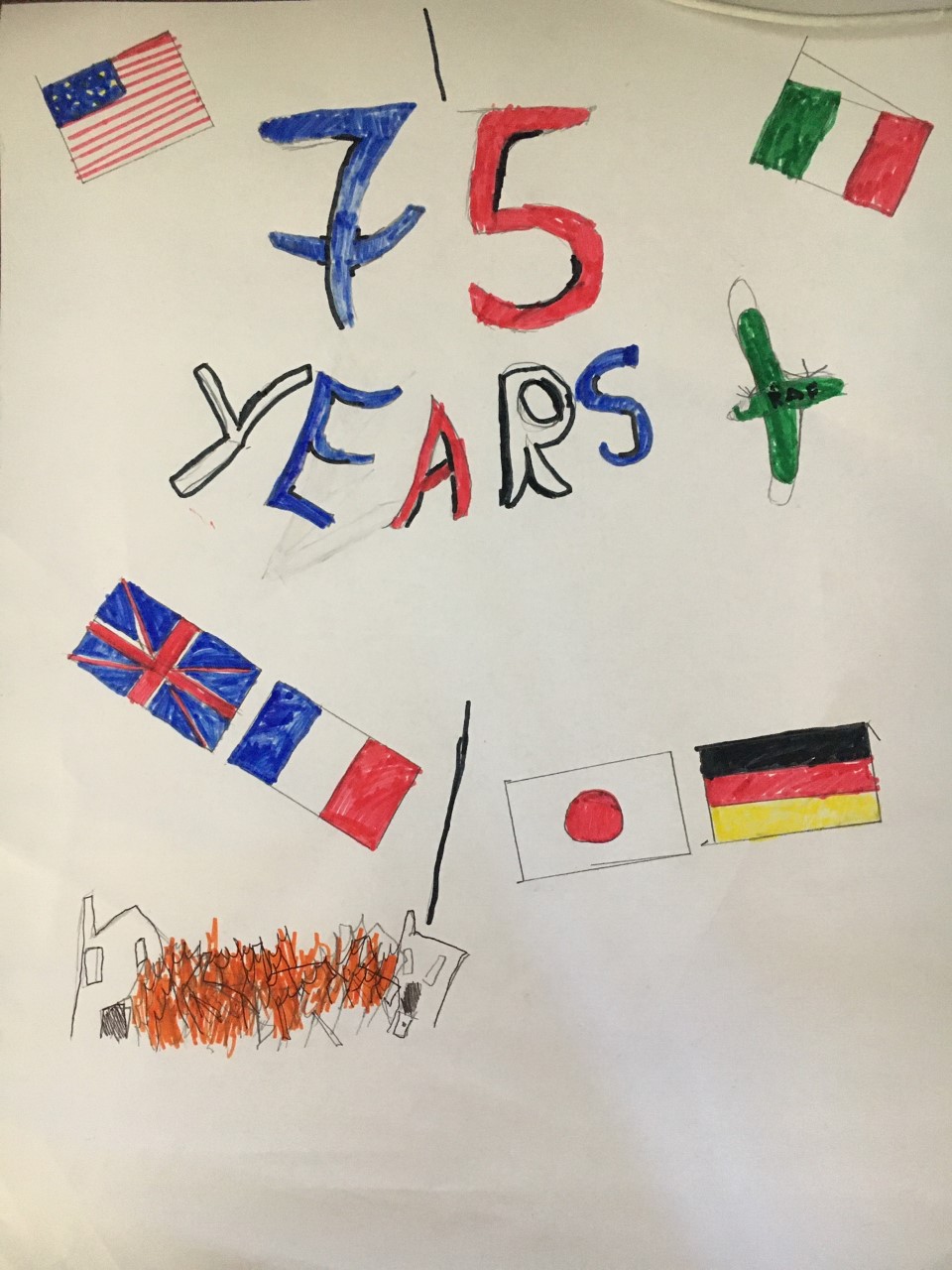
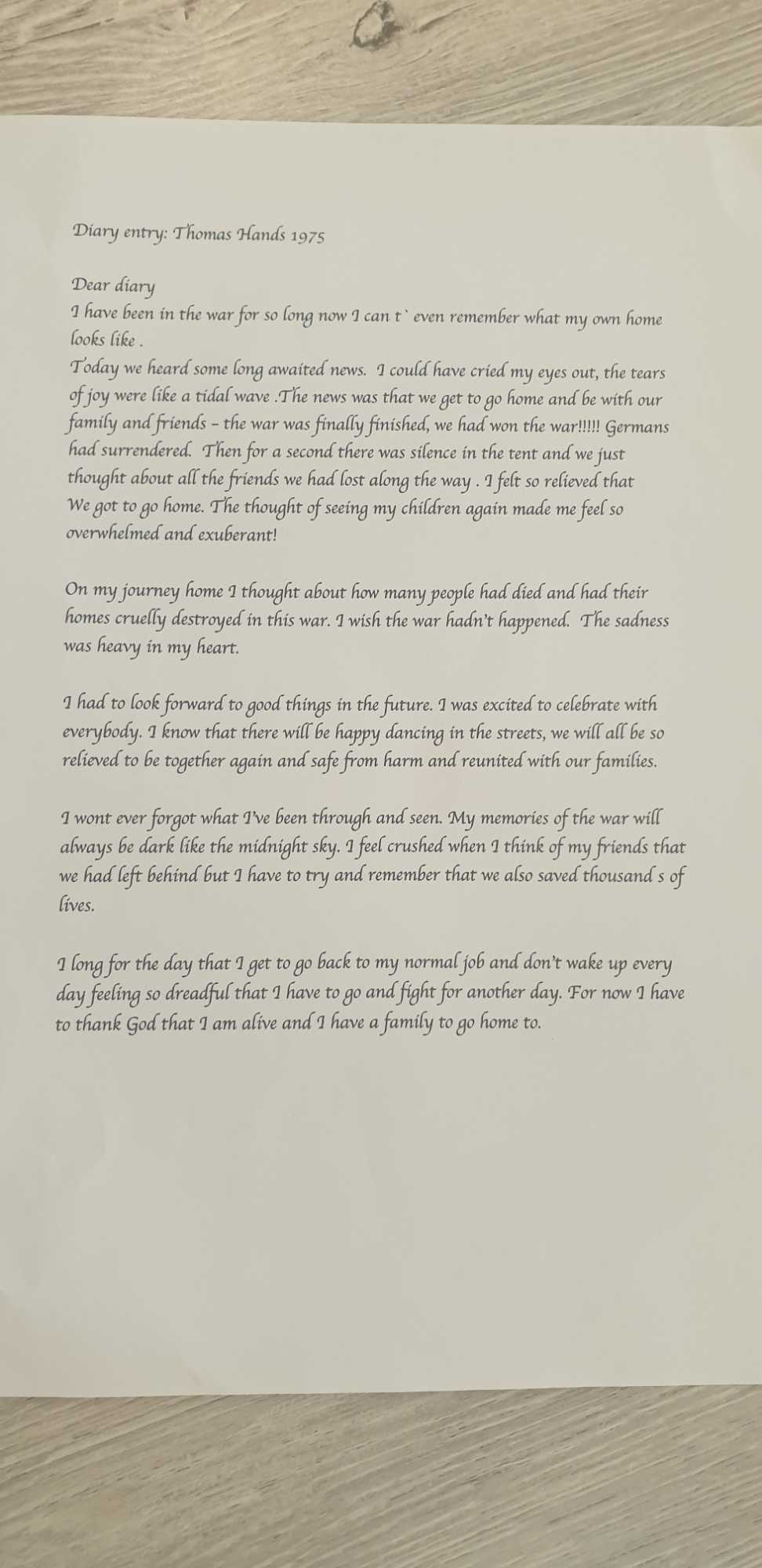
Edward in Year 1 took it upon himself to create a memento for him to remember the day in years to come, take a look at his fantastic newspaper report in the document below!
Geography at Tanworth-in-Arden
Intent
At Tanworth-in-Arden we aim to inspire pupils with a curiosity about the world and its people that will last a lifetime. Our geography curriculum enables pupils to gain knowledge of diverse places, people, resources and natural and human environments. Through the seven geographical concepts of place, space, environment, interconnection, scale, sustainability and change, pupils develop an understanding of the world around them and their role within it.
We want pupils to:
-
Develop secure locational knowledge and an awareness of the wider world
-
Understand human and physical processes and how they shape places over time
-
Use fieldwork and enquiry skills to ask and answer questions about the world around them
-
Build an appreciation of how geography links with other subjects and supports wider learning
-
Become responsible global citizens who understand the importance of sustainability and interdependence
Implementation
Geography is taught through carefully planned units that build progressively from Reception to Year 6, ensuring coverage of the National Curriculum and our seven key concepts. Each year group revisits and deepens their understanding of place and space, while also exploring concepts such as environment, change, interconnection, scale and sustainability at appropriate stages.
-
Early Years and KS1 focus on pupils’ immediate environment, their homes and local area, before broadening into the UK and contrasting countries. Fieldwork skills such as simple mapping and using directional language are introduced early.
-
Lower KS2 build on these foundations by exploring settlements, rivers, deserts and Europe. Pupils develop skills in observation, sketching, map work and identifying human and physical features at different scales.
-
Upper KS2 extend their knowledge globally, studying the Americas, Greece, Brazil and the Amazon, as well as physical geography such as mountains, volcanoes and earthquakes. Fieldwork becomes more complex, involving OS maps, grid references, contour lines and thematic maps.
-
Fieldwork and enquiry are integral at all stages, allowing pupils to collect, record, analyse and present geographical data in a variety of ways.
-
Cross-curricular links are made where possible, for example with history (Romans, WW2), science (rivers, climate) and PSHE (sustainability and global citizenship).
Resources such as atlases, globes, digital maps and online data tools are used alongside outdoor learning to bring geography to life.
Around School

Impact
By the time they leave Tanworth-in-Arden, pupils will:
-
Have secure knowledge of the world’s continents, countries and key physical and human features
-
Be confident in using geographical vocabulary and skills, including fieldwork, mapping and enquiry
-
Understand how people and environments are interconnected and how actions at different scales can affect change
-
Be able to compare and contrast places, cultures and environments both locally and globally
-
Appreciate the importance of sustainability and be able to discuss challenges facing our world
-
Be prepared for secondary school geography with strong foundations of knowledge, skills and curiosity
Pupil voice
Digimaps
As a school we subscribe to Digimaps which is a digital map service. It enables the children to study maps in Geography lessons or planning actual routes that they will then walk, mapping a route and adding any photos or notes onto a map for later reference. The children are also able to compare old maps and look at how areas have changed over time. Below are some ideas about how Digimaps can be used at home. If you would like to access the school's Digimaps account then please speak to Miss Hodges.

At Tanworth‑in‑Arden CofE Primary School, science is hands‑on, exploratory and rooted in curiosity. We encourage pupils to ask questions about the world around them, plan investigations, test their ideas and explain what they discover using scientific language. Our aim is for every child to see themselves as a scientist – confident, inquisitive and excited to find out how things work.
Intent:
Our science curriculum aims to develop pupils’ curiosity and sense of awe and wonder about the world in which they live. We want children to build strong scientific knowledge alongside the skills needed to think and work scientifically. By the time pupils leave Tanworth, they will be able to ask meaningful questions, make predictions, carry out fair tests, analyse findings and explain their ideas clearly.
Science at Tanworth prepares pupils not only for the next stage of their education, but also for life in an increasingly scientific and technological world. We aim to help children understand the impact of science on their everyday lives and their responsibility to care for the world around them.
Working Scientifically
Working scientifically is at the heart of science teaching across the school. Pupils are taught to:
- ask and develop their own questions
- make predictions based on prior knowledge
- plan and carry out investigations
- observe carefully and take measurements
- record results in a range of ways
- use scientific vocabulary to explain findings
These skills are developed progressively from the Early Years through to Year 6, so pupils become increasingly independent and confident in their approach to scientific enquiry.
Implementation:
Science is taught as a discrete subject across the school, with regular opportunities for practical, hands‑on learning. Lessons are carefully planned to build on prior knowledge and to ensure progression in both scientific understanding and enquiry skills.
Discussion and talk are valued in science lessons, allowing pupils to share ideas, question outcomes and deepen understanding. Where appropriate, science is linked with other areas of the curriculum, including mathematics, literacy and outdoor learning, helping children see science as part of the wider world rather than a stand‑alone subject.
In the Early Years, science is taught through the “Understanding the World” area of learning, where children explore, observe, compare and ask questions about their environment through purposeful play and exploration.

Science Learning on Display
Science learning is made visible and celebrated across the school. Displays, working walls and washing lines of books show how pupils develop scientific vocabulary, record observations and reflect on the outcomes of their investigations. These displays help pupils revisit prior learning, make connections and feel proud of their progress, while also allowing parents and visitors to see science learning developing over time.
Science in Action
Alongside written outcomes, pupils are regularly involved in practical investigations. Children measure, test, observe, predict and discuss their ideas, learning that results do not always match predictions and that this is an important part of scientific learning.
Through these experiences, pupils develop resilience, collaborative skills and confidence in explaining their thinking.
Enrichment and Wider Science Opportunities
Where possible, science learning is enriched through themed weeks, outdoor learning opportunities and links to the wider world. These experiences help pupils see the relevance of science beyond the classroom and inspire curiosity about future learning and careers in science.
Assessment and Progress
Pupils’ progress in science is assessed through observation, discussion, practical outcomes and written work. Teachers use assessment to identify misconceptions, build on strengths and adapt teaching where needed. As pupils move through the school, they demonstrate increasing independence, deeper understanding and greater confidence in working scientifically.
Science School Overview
Scientific Vocabulary
Developing scientific vocabulary is a key focus in science lessons. Pupils are encouraged to use accurate language when describing observations, processes and conclusions. Vocabulary is introduced, revisited and displayed in classrooms so that pupils can confidently explain their ideas both verbally and in writing.
Vocabulary Progression in Science

Intent
At Tanworth-in-Arden Primary School, we believe that Physical Education (PE) plays a vital role in ensuring that children reach their full potential, both physically and emotionally, while maintaining good health in a safe and encouraging environment. Our goal is to provide high-quality teaching that motivates every child to succeed in physical education and develop important life skills. We aim to equip children with skills that help keep them safe, such as learning how to swim. Additionally, we focus on teaching cooperation, teamwork, and the importance of fairness, fostering values that will last a lifetime. Our PE curriculum is designed to enhance the wellbeing and fitness of all pupils at Tanworth-in-Arden, not only through sports, but by promoting the core values and discipline that PE instils.
Implement
Early Years
Nursery and Reception children focus on developing control and coordination within gross and fine movements. They begin to move in a range of ways concentrating on safely negotiating space. Children will learn to travel in different ways both on and off equipment and link simple gymnastic movements. Children will develop their ball skills through throwing and catching, and engage in dance units to progress their rhythm and movements. Children will also have the opportunity to develop outside skills using forest school facilities to experience climbing. They will start to work with peers to complete problem solving tasks. Children will be able to understand basic changes to their bodies, due to exercising. Children will also begin to gain confidence in performing in front of peers.
Key stage 1
In Year One, children move on to developing fundamental movement skills which enable children to become increasingly confident and competent across a range of movements such as running, jumping, throwing and catching. Children will access a broad range of opportunities to extend their agility, balance and coordination, as well as beginning to experience dance and gymnastics units in which they develop flexibility, strength, technique, control and balance. Children will also have the opportunity to develop outside skills using forest school facilities to experience climbing. Children will start to describe why we take part in exercise and why we enjoy it. Children will start to understand basic rules of various sports whilst implementing them in a fun competitive tournament.
In Year Two, they will begin to apply basic movements to a range of activities which focus on further developing both gross and fine motor skills. These will include hitting objects with a bat or the hand, tracking and retrieving rolling balls and walking, running and travelling at a variety of speeds. Children will also begin to recognise rules and strategies and apply them in competitive and cooperative games. Children will be introduced to certain positional roles in different sports. Children will also have the opportunity to develop outside skills using forest school facilities to experience climbing.
Children will develop the way they describe why we take part in exercise and why we enjoy it.
Key stage 2
At the start of the juniors, children continue to apply and develop a broader range of skills through running, jumping, throwing and catching and move on to using these in isolation and in combination. Through dance and gymnastics children in Years Three and Four will learn how to use skills in different ways linking them to make sequences of movement. Towards the summer term, children in year three will experience racket and ball sports such as cricket and tennis, they will begin to learn the rules, and develop their batting and hitting skills within the game. By the time they reach Year Four, children will become more secure in their knowledge of rules and strategy and will be able to apply these to team games, which may be modified if necessary. Over the two year groups they will begin to apply tactical awareness over a variety of different sports. They may start representing the school in different competitions throughout the academic year.
By the time children reach Upper Key Stage Two, children will take part in competitive games and will be able to apply principles suitable for attacking and defending. In contrast to key stage one, in which children worked individually, children will now be expected to communicate and collaborate with each other within a team. They will be more adept at understanding how to improve their own skills by comparing their performances with previous ones and will demonstrate an understanding of, and desire to, achieve their personal best. Additionally, children will begin to critically evaluate the performance of others, giving specific feedback based on their understanding of skills previously taught. They will have more opportunities to represent the school in competitions and fixtures. By the end of Year 6 children will have a broader knowledge of the different skills and rules needed to play a variety of sports that will transfer to their high school setting.
Wow Active
Children in years Reception - 6 participate in a Wow active assessment each term. This assesses their physical literacy and activity levels. It enables children to compete against themselves and try to achieve personal bests as well as allowing teachers to see where children may need further support and guidance.
Please see the link for more information https://wowactive.co.uk/
Impact

Further information
Brain breaks

Sustainability
At Tanworth in Arden C of E Primary School, sustainability is rooted in our Christian values, particularly stewardship, responsibility and care for God’s creation. We are committed to ensuring that pupils develop a strong understanding of their role in protecting the environment, both now and for the future. Our approach is guided by our School Climate Action Plan, which sets out clear, realistic actions to reduce our environmental impact while enriching pupils’ learning and experiences across the curriculum.
Sustainability is woven thoughtfully through school life and learning. Pupils explore environmental issues through subjects such as Science, Geography, Design Technology and RE, alongside practical experiences through Forest School, OPAL play and enrichment activities. We actively encourage pupil leadership through our Eco Warriors, enabling children to take ownership of sustainability initiatives and model positive environmental behaviour. We also work with external partners, including Let’s Go Zero, to ensure our approach reflects best practice and supports continuous improvement.
Our approach to sustainability is closely linked to our identity as a Church of England school. Through this work, pupils are encouraged to live out the values of stewardship, by caring for God’s creation; dignity, by understanding how environmental issues affect people differently across the world; and hope, by recognising that positive action, however small, can contribute to a fairer and more sustainable future. Sustainability therefore supports both academic learning and pupils’ spiritual, moral and social development.

Progress against the Climate Action Plan is reviewed regularly to ensure actions remain effective, realistic and responsive to the needs of the school and its community.
Intent
Our intent is to ensure that all pupils:
- Understand their responsibility to care for the environment as part of Christian stewardship
- Develop knowledge of climate change, sustainability and biodiversity
- Are empowered to take informed, practical action within school and beyond
Implementation
This is delivered through:
- A whole‑school Climate Action Plan
- Curriculum links embedded across subjects and year groups
- Pupil leadership through the Eco Warriors
- Practical initiatives such as energy monitoring, biodiversity projects and sustainable play
- Ongoing professional development and external support
Impact
As a result:
- Pupils demonstrate strong awareness of environmental issues and sustainable choices
- Children actively contribute to improving the school environment
- Sustainability enhances learning, wellbeing and responsibility
- The school continues to reduce its environmental impact in measurable ways
What this looks like in practice
- Eco Warriors meet regularly to lead sustainability activities and share learning with the wider school
- Pupils monitor energy use and learn how tools such as thermal imaging cameras and light meters support energy efficiency
- Biodiversity is promoted through wildlife surveys, habitat improvements and Forest School learning
- Sustainability themes are embedded in curriculum topics, including climate, habitats, resources and global responsibility
- A developing Sensory Garden, led by the Eco Warriors, supports biodiversity, wellbeing and inclusive play as part of OPAL
- Whole‑school initiatives such as uniform reuse, recycling education and charity collections reduce waste and encourage reuse
- Partnerships with organisations such as Let’s Go Zero support staff knowledge and long‑term planning
We value the support of parents and carers in helping pupils develop sustainable habits both in school and at home.
If you would like any more information regarding Tanworth's Curriculum, please talk with you child's class teacher.
Alternatively, Miss Evens is the school's Curriculum Leader.